
Best Healthcare Support Jobs in Canada (Non-Medical Careers 2026)
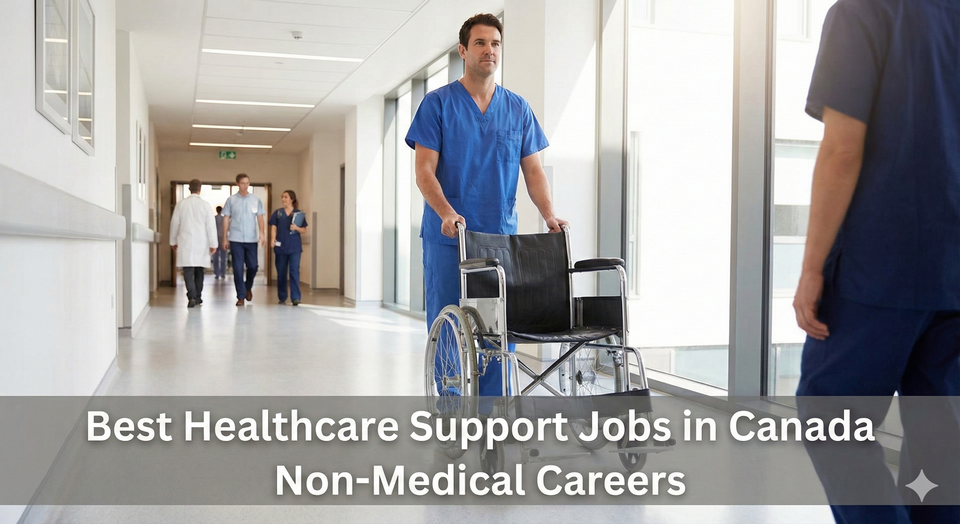
In Canada, the Healthcare sector is the largest employer in the country. But there is a huge misconception that you need a 4-year degree to work there.
The reality is that for every Doctor or Nurse, there are 5 support staff members running the building behind the scenes.
These are the "Non-Medical" roles. These people don't diagnose patients or give needles. They move equipment, manage paperwork, sterilize tools, and keep the hospital running.1
Why should you want these jobs?
- Union Protection: Most are unionized (CUPE, SEIU, HEU), meaning guaranteed raises and impossible-to-lose jobs.
- The Pension: You get the same "HOOPP" (or provincial equivalent) pension plan as the surgeons.
- Recession Proof: People get sick in good economies and bad. You will never be laid off.
If you want the stability of healthcare without the stress of medical school, here are the best support jobs to target in 2026.
1. Medical Device Reprocessing Technician (MDRT)
The Job: The "Sterilization Expert."
What they do: When a surgeon finishes an operation, the tools (scalpels, clamps) are covered in biohazard. They go to the MDR department. You clean, decontaminate, and re-sterilize them for the next surgery.
The Pay: $24.00 – $32.00 per hour.
The Entry:
- You need a MDR Certificate (usually a 4-8 month college program).
- It is in massive demand. Every hospital needs them 24/7.Why it wins: It is technical and quiet. You work in the basement (usually), away from patients and angry families. It is pure focus.
2. Hospital Porter (Patient Transport)
The Job: The "Mover."
What they do: Moving patients from their room to X-Ray, taking bodies to the morgue, or rushing blood samples to the lab.
The Pay: $21.00 – $26.00 per hour.
The Entry:
- No degree required.
- You need CPR/First Aid and physical strength (pushing beds is heavy).The Vibe: It is the most social job in the hospital. You walk 20km a day, making it a great fit for active individuals. If you enjoy physical work but prefer an industrial setting, check our Best Factory Jobs Guide for similar active roles.
3. Unit Clerk / Ward Clerk
The Job: The "Gatekeeper."
What they do: Sitting at the front desk of a specific ward (e.g., ICU or Maternity). You answer phones, page doctors, process admission paperwork, and direct visitors.
The Pay: $23.00 – $29.00 per hour.
The Entry:
- Requires a "Medical Terminology" certificate (often 3 months online).
- You must be highly organized. Nurses rely on you to keep the charts in order.The Stress: High. You are the face of the unit. When a family is angry, they yell at you first. You need thick skin.
4. Dietary Aide / Food Service Worker
The Job: The "Nutrition Staff."
What they do: Assembling meal trays based on strict dietary restrictions (e.g., "No Salt for Bed 4," "Liquid Diet for Bed 9") and delivering them to rooms.2
The Pay: $19.00 – $24.00 per hour.
The Entry:
- Food Handler Certificate (1 day course).
- It is often the easiest entry point into the hospital system. Once you are "in" as a Dietary Aide, you can apply internally for Porter or Clerk jobs. If you are looking for other roles with minimal barriers to entry, read our guide on the Easiest Jobs to Get in Canada.
5. Housekeeping (Environmental Services)
The Job: The "Infection Control."
What they do: Cleaning rooms after patients are discharged. As mentioned in our Cleaning Guide, this is specialized work involving isolation protocols. To understand how hospital cleaning wages compare to private sector janitorial work, see our Best Cleaning Jobs Analysis."
The Pay: $20.00 – $25.00 per hour.
The Benefits: Unlike hotel cleaning, hospital cleaning comes with full union benefits.
The Schedule: often offers flexible shifts (Evenings/Weekends), making it good for students.
6. Inventory / Supply Chain Technician
The Job: The "Stock Manager."
What they do: Ensuring the supply closets are full of gloves, syringes, and bandages. You scan inventory and restock carts.
The Pay: $22.00 – $27.00 per hour.
The Entry:
- Previous warehouse experience helps.
- No medical knowledge needed, just logistics.Why it wins: Low stress. You are managing boxes, not people.
7. Switchboard Operator
The Job: The "Voice."
What they do: Answering external calls and routing them. More importantly, you announce "Codes" overhead (e.g., "Code Blue, Room 402").
The Pay: $21.00 – $25.00 per hour.
The Entry:
- Excellent English/French skills.
- Calm under pressure. When a massive emergency happens, you are the communications hub.
Comparison Table: Certification vs. Pay
| Job Title | Required Education | Physical Level | Pay Range |
| MDR Technician | 6 Month Certificate | Medium | $26 - $32 |
| Unit Clerk | 3 Month Course | Low (Desk) | $24 - $29 |
| Porter | CPR / First Aid | High (Walking) | $21 - $26 |
| Dietary Aide | Food Handler (1 Day) | Medium | $19 - $24 |
| Inventory | High School | Medium | $22 - $27 |
Practical Questions Answered
"How do I get hired? I apply but hear nothing."
It is all about the "Casual Pool."
- The Trap: Hospitals rarely hire full-time staff externally. They give those jobs to internal union members.
- The Hack: You must apply for "Casual" or "Part-Time" positions first. You work "On-Call" for 6 months, gain seniority, and then bid on the permanent full-time lines. You have to pay your dues.
"Is MDRT gross?"
Yes, initially.
- The Reality: You are handling tools that have been inside a human body. There is blood and bone fragments. You wear heavy PPE (Personal Protective Equipment). If you faint at the sight of blood, do not do this job, even though it pays well.
"Do I need to be bilingual?"
In Ottawa, Montreal, or New Brunswick: YES.
- In these regions, it is almost impossible to get a Clerk or Switchboard job without French.
- In Toronto, Vancouver, or Calgary: No, English is usually sufficient, though a second language (Punjabi, Mandarin) is a huge asset.
"Are these jobs safe?"
Mostly, but violence happens.
- The Risk: Porters and Security guards face the highest risk of physical abuse from confused or aggressive patients.
- The Protection: Hospitals have "Code White" teams (security response) to protect staff.3
Frequently Asked Questions
Do I get a pension as a part-timer?
Yes, usually.
In many provinces (like Ontario with HOOPP), even part-time and casual staff can opt-in to the pension plan.4 This is a massive financial advantage that retail jobs do not offer.
Can I transition to Nursing later?
Yes.
Many hospitals offer "Tuition Assistance." If you are working as a Porter and decide to go to Nursing school, the hospital might pay for part of your tuition, and you already have your foot in the door for a job when you graduate.
What is the best entry-level job for a newcomer?
Housekeeping or Dietary Aide.
These roles have the lowest language and certification barriers. Once you are inside the system (and the union), it is much easier to move laterally into other departments.
About the author
Jeff Calixte (MC Yow-Z) is a Canadian career researcher and digital entrepreneur.5 He tracks real-time labour market data, government hiring trends, and entry-level opportunities to help newcomers and students navigate the Canadian job market.
Sources
- Medical Device Reprocessing Association of Ontario (MDRAO): https://mdrao.ca/
- Hospital Employees' Union (BC Jobs): https://www.heu.org/
- CUPE Health Care Workers: https://cupe.ca/health-care
Note:
Job availability, wages, and hiring conditions can vary widely by province, employer, season, and experience level. All salary ranges and job examples in this guide are estimates based on current labour market data. Always confirm details directly with the employer before applying.