
Best Jobs for People with Disabilities in Canada (Accommodated Work 2026)
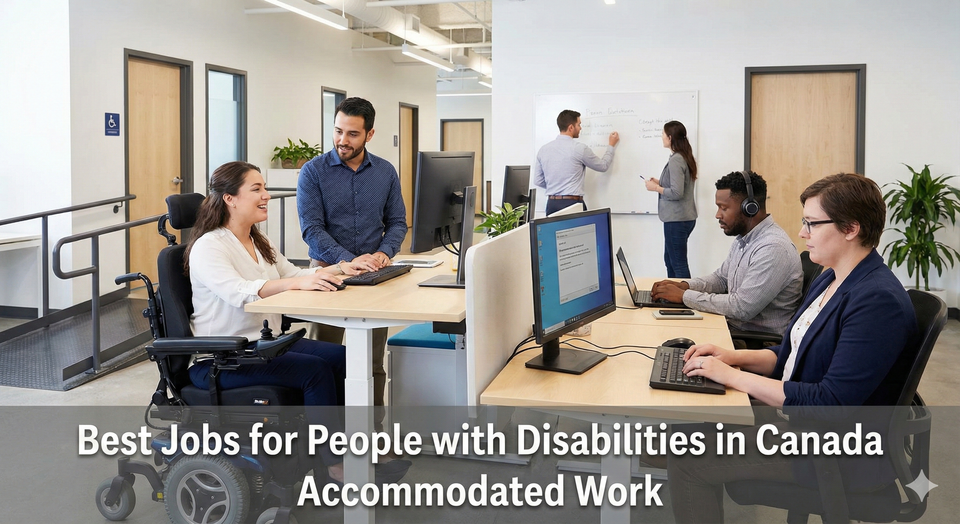
For decades, the advice given to workers with disabilities was: "Hide it."
People were terrified that if they disclosed their ADHD, mobility issues, or chronic illness during an interview, they would be quietly rejected.
In 2026, the script has flipped.
Thanks to the Accessible Canada Act (Bill C-81) and massive labour shortages, major employers are no longer just "accepting" applications from people with disabilities; they are actively hunting for them.
The Government of Canada recently smashed its target of hiring 5,000 new employees with disabilities, and they aren't stopping. Banks like CIBC and tech giants like SAP have launched specific "Neurodiversity at Work" programs designed to hire people on the Autism spectrum because they realized these candidates often possess superior pattern recognition and focus.
If you need a job that fits you—instead of you twisting yourself to fit the job—here is the definitive guide to accommodated work in Canada.
1. The Federal Government (The "5k" Initiative)
Status: TIER 1 (Gold Standard)
Employer: Government of Canada (All Departments).
The Federal Government is the largest and most accommodating employer in the country. Period.
The "Self-Declaration" Advantage
When you apply to a government job (GC Jobs), there is a box that asks if you identify as a person with a disability.
- Old Thinking: "If I check this, they won't hire me."
- New Reality: "If I check this, I enter a smaller, priority pool."Many departments have mandatory hiring quotas. By self-declaring, you often bypass the general applicant pool and get fast-tracked to the assessment stage.
The "Virtual Door"
- Recruitment of Policy Leaders (RPL): This prestigious stream has a dedicated track for persons with disabilities.
- The Accommodation: If you need extra time for the entrance exam, large font, or a sign language interpreter, they must provide it by law. They cannot say no.
- The Workplace: Once hired, you get access to the "Accessibility Passport." This is a digital document that travels with you. If you need a specialized ergonomic chair or screen reader software, you document it once in your passport, and every future manager must provide it without you having to ask again.
2. Financial Services (The Neurodiversity Leaders)
Status: TIER 1 (Corporate)
Employers: CIBC, TD Bank, BMO, EY Canada.
Banks have realized that "Neurodiverse" talent (Autism, ADHD, Dyslexia) is a superpower for data-heavy roles.
"Autism at Work" Programs
- The Concept: Traditional interviews (social chit-chat, eye contact) are often barriers for autistic candidates. Programs at companies like EY (Ernst & Young) and CIBC replace the interview with a "Skills Assessment."
- The Process: You might spend a week solving coding problems or analyzing data. If you can do the work, you get the job. Social awkwardness is irrelevant.
- The Roles: Cybersecurity Analyst, Fraud Detection, Quality Assurance (QA), Data Entry.
- The Pay: These are standard corporate roles paying $60,000 – $90,000. You are not paid less because of your disability.
3. Remote Tech Support (The "Work from Home" King)
Status: TIER 2 (Flexible)
Employers: Shopify, Automattic (WordPress), Teleperformance.
For those with physical mobility issues or chronic pain/fatigue (e.g., Fibromyalgia, Long COVID), the commute is often the hardest part of the job.
The "Digital First" Model
- The Job: Customer Success Guru, Trust & Safety Officer, IT Support.
- The Accommodation: You work 100% from home. You control your environment (lighting, temperature, chair).
- Asynchronous Work: Companies like Automattic work "asynchronously." This means you don't have to be online at 9:00 AM. You just need to finish your tasks by the end of the day. This is life-changing for people who need frequent medical breaks or have unpredictable energy levels.
- Internal Link: This aligns with the "No Degree" tech roles we covered in our IT Support Guide.
4. Government Agencies (Crown Corporations)
Status: TIER 1 (Stability)
Employers: Canada Post, CMHC (Housing), FCC (Farm Credit Canada).
Crown Corporations fall under the same federal laws as the government, meaning they have strict Employment Equity targets.
- Canada Post: actively recruits for administrative and logistics roles. They have robust "Return to Work" plans for employees who become disabled on the job.
- CMHC: Has a specific 2026 strategy to overhaul their recruitment process to be "Barrier-Free."
- The Benefit: These jobs come with the Defined Benefit Pensions we discussed in Article #112.
5. Entrepreneurship (The "Be Your Own Boss" Route)
Status: TIER 3 (High Risk/High Reward)
Program: Entrepreneurs with Disabilities Program (EDP).
Sometimes, the only way to get the perfect accommodation is to build it yourself.
- The Funding: In Western Canada (BC, AB, SK, MB), the EDP provides loans and mentorship to business owners with disabilities.
- Opportunities Fund: The federal "Opportunities Fund for Persons with Disabilities" provides grants (money you don't pay back) to help you start a business or get training.
- Why do it? You set the hours. If you can only work 4 hours a day, you build a business that runs on 4 hours a day.
6. University & College Administration
Status: TIER 2 (Unionized)
Employers: U of T, UBC, McGill.
Universities are massive bureaucracies that value diversity.
- The Jobs: Student Advisor, Registrar’s Office, Research Assistant, Library Technician.
- The Culture: Universities are often the most progressive workplaces in Canada. They usually have an "Equity, Diversity, and Inclusion" (EDI) office dedicated to supporting staff.
- The Accommodation: Physical campuses are usually fully accessible (ramps, elevators, braille signage) because they must serve students.
7. Insurance Claims (The Silent Industry)
Status: TIER 2
Employers: Intact, Sun Life, Manulife.
Insurance companies understand disability better than anyone—because they pay for it.
- The Job: Disability Case Manager, Claims Adjuster.
- The "Lived Experience" Asset: Who better to manage a disability claim than someone who understands the system? Your experience navigating the medical system is actually a resume asset here.
- The Pay: $60,000 – $80,000 + Bonus.
Comparison Table: Types of Accommodation
| Sector | Primary Accommodation | Best For | Hiring Quota? |
| Federal Gov | Accessibility Passport | All Disabilities | YES |
| Banks | Alternative Interviews | Autism / ADHD | Yes (Internal) |
| Remote Tech | 100% WFH | Mobility / Fatigue | No |
| Universities | Physical Access | Mobility / Visual | Yes |
| Retail (Big Box) | Scheduled Breaks | Intellectual | Sometimes |
Practical Questions Answered
"Should I disclose my disability?"
It depends on the employer.
- Small Business: Be careful. A mom-and-pop shop with 5 employees might not have the budget or HR knowledge to accommodate you, even though it's the law. Discrimination is hard to prove.
- Large Corp / Gov: YES. Always disclose. They have quotas to hit. By disclosing, you are actually helping the HR manager meet their diversity targets. You become a "Value Add" candidate.
"What if I need expensive equipment?"
You don't pay for it.
- The Law: The "Duty to Accommodate" means the employer must pay for reasonable accommodations (ergonomic chairs, JAWS software, special keyboards) up to the point of "Undue Hardship."
- The Reality: For a bank or the government, a $1,000 chair is pennies. They will buy it without blinking.
"Can I lose my ODSP/benefits if I work?"
Yes, but you likely come out ahead.
- The Math: Disability payments (ODSP, AISH, PWD) usually have a "clawback." For every dollar you earn, they take back $0.50.
- The Strategy: Do not stay on benefits out of fear. A $60,000 job pays far more than ODSP ever will, even after taxes and lost benefits. Plus, many provinces allow you to keep your Health Benefits (drug coverage) even if you leave the income support program.
Frequently Asked Questions
What is the "Accessibility Passport"?
It is a tool used by the Government of Canada. It documents your accommodation needs (e.g., "I need a quiet workspace" or "I need meetings to be captioned"). It belongs to you, not your boss. When you change jobs within the government, you just show your passport to the new manager, and your setup is ready day one.
Does "Mental Health" count as a disability?
Yes. 100%.
Under the Accessible Canada Act, disability includes mental, intellectual, cognitive, and sensory impairments. Anxiety, Depression, and PTSD are legally protected disabilities. You are entitled to accommodation (like flexible hours for therapy appointments) just like someone with a physical injury.
What is a "Designated" job?
Some government job postings are marked: "Area of Selection: Open only to persons with disabilities."
This means only people who self-declare can apply. If you see this, apply immediately. Your competition is 95% lower than a standard job poster.
About the author
Jeff Calixte (MC Yow-Z) is a Canadian career researcher and digital entrepreneur. He tracks real-time labour market data, government hiring trends, and entry-level opportunities to help newcomers and students navigate the Canadian job market.
Sources
- Government of Canada (Public Service Accessibility): https://www.canada.ca/en/government/publicservice/wellness-inclusion-diversity-public-service/diversity-inclusion-public-service/accessibility-public-service.html
- Discover Ability Network (Job Matching): https://discoverability.network/
- Specialisterne Canada (Neurodiversity Hiring): https://ca.specialisterne.com/work-with-us/
Note:
Job availability, wages, and hiring conditions can vary widely by province, employer, season, and experience level. All salary ranges and job examples in this guide are estimates based on current labour market data. Always confirm details directly with the employer before applying.