
Canada Post Holiday Sorting: Is It Overnight Only? (2026 Guide)
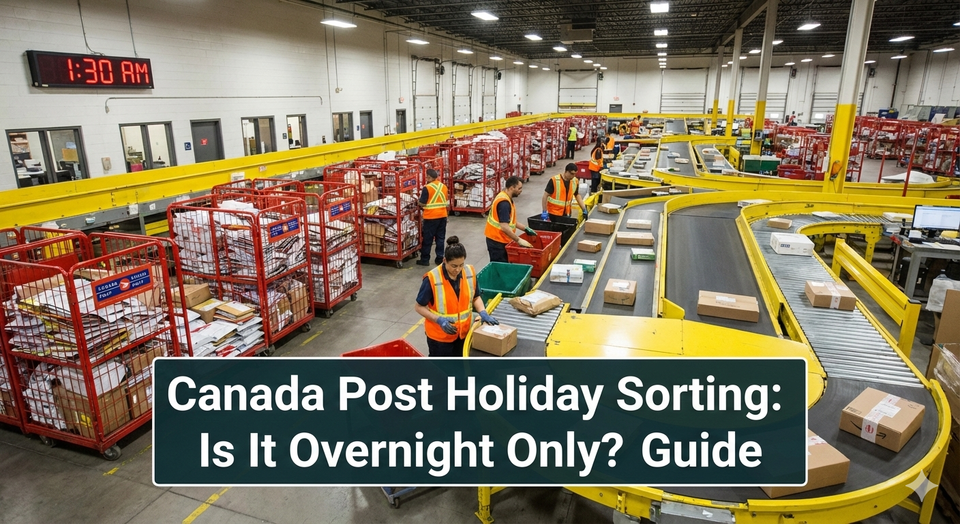
Every October, the ads appear everywhere: "Canada Post Hiring Seasonal Postal Clerks. Earn Extra Cash for the Holidays."
For students and people looking for a side hustle, it sounds perfect. You imagine sorting a few letters to Grandma while listening to Christmas music.
The reality is more like industrial CrossFit.
In 2026, the volume of parcels from Amazon, Temu, and Shein has turned Canada Post processing plants (like the massive Gateway facility in Mississauga) into 24/7 logistics fortresses.
The job pays well—starting around $23.00/hour—but the shifts can be brutal.
A common myth is that all seasonal work is Overnight (Graveyard).
While the "Midnight Shift" is where the heavy lifting happens, there are actually three distinct shifts you can land.
This guide breaks down the shift premiums, the physical "GAT" test you must pass, and the slim chances of turning this 2-month gig into a lifetime career.
Prefer driving to sorting? Check out Bin Rental Driver for a solo job, or Night Shift Warehouse if you want year-round stability.
The Pay: Base Rate vs. Shift Premiums
Canada Post is a Crown Corporation, meaning the pay is standardized by the CUPW (Canadian Union of Postal Workers) collective agreement. You won't negotiate your wage; you get what the book says.
1. The Hourly Rate (2026 Est.)
- Base Rate: $22.50 - $24.00/hour.
- Overtime: 1.5x after 8 hours a day or 40 hours a week. During December, overtime is almost guaranteed if you want it.
2. The Shift Premiums
This is why people fight for the "bad" shifts.
- Evening (Twilight): +$0.85 - $1.25/hour.
- Midnight (Graveyard): +$1.00 - $2.50/hour.
- Weekend Premium: Additional hourly bump for Saturday/Sunday work.
- The Math: A midnight shift on a Sunday can push your effective rate close to $30/hour for an entry-level job.
The Shifts: It’s Not Just "Overnight"
The mail never stops moving. Plants run 24 hours a day, 7 days a week.
1. Shift 1: The "Midnight" (23:00 - 07:00)
- Who works it: The grinders and the students.
- The Vibe: Heads down, headphones on (if allowed), minimal talking. This shift handles the massive influx of parcels arriving from airports and trucks overnight.
- Pros: Highest pay, no traffic driving to work.
- Cons: It destroys your sleep schedule. You are a zombie by Christmas.
2. Shift 2: The "Day" (07:00 - 15:00)
- Who works it: Senior employees and lucky seasonal hires.
- The Vibe: Busy, loud, lots of management walking around.
- Pros: Normal life schedule.
- Cons: Lowest pay (no premiums), strict supervision.
3. Shift 3: The "Twilight" (15:00 - 23:00)
- Who works it: People with day jobs or students with morning classes.
- The Vibe: The "Cleanup Crew." You are clearing the floor before the night rush hits.
- Pros: You can sleep in.
- Cons: Your social life is dead. You work while your friends are at dinner.
Deep Dive: The "GAT" Test (Don't Fail Before You Start)
You cannot just walk in. You have to pass the General Abilities Test (GAT).
1. The Memory Check
- They show you a list of addresses for 5 minutes.
- You turn the page and have to match the correct postal codes to the streets.
- Why: Sorting is all about Alpha-Numeric Recognition. If you confuse
L4WwithL4M, you send a package to the wrong city.
2. The Physical Sort
- You stand in front of a "Sorting Case" (pigeon holes).
- You have a stack of dummy letters.
- The Task: Sort 30 letters per minute into the correct slots.
- The Trick: It’s not about speed; it’s about Accuracy. One mistake is worse than being slow.
Deep Dive: The "Gateway" Reality (Mississauga)
If you live in the GTA, you will likely work at the Gateway Postal Facility on Dixie Road.
- Scale: It is massive. It has its own bus stop.
- Security: It is tighter than an airport.
- You go through metal detectors every day.
- No cell phones on the floor (in some high-security zones).
- Clear Bags: You must bring your lunch in a clear plastic bag so security can see through it.
- Internal: The security here rivals the checks at Fort McMurray Camps.
Deep Dive: Hidden Pay Rules & The "Casual" Trap (Extra 700 Words)
1. The "3-Hour Guarantee" (Free Money)
- This is the most important Union Rule for new hires.
- The Rule: If you are scheduled to work, and you show up, they MUST pay you for 3 hours, even if they send you home 10 minutes later because there is no mail.
- The Scenario: You arrive at 11:00 PM. The trucks are delayed. The supervisor says, "Go home, we don't need you."
- Your Action: You go home, but you check your pay stub to ensure you got your Reporting Pay (3 hours). If not, you file a grievance.
- Link: This is similar to the "Show Up Pay" protections unionized Traffic Control Persons get when rain cancels a shift.
2. "Term" vs. "Casual" (Read Your Contract)
- Not all seasonal jobs are the same.
- Term Employee: You have a specific start and end date (e.g., Nov 15 to Jan 15). You have a set schedule (e.g., Mon-Fri, 4pm-12am). Take this one.
- Casual Employee: You have NO guaranteed hours. You are "On Call."
- The Risk: You might sit by your phone for 3 weeks and get 0 calls. Then, in the week before Christmas, they call you every day at 4:00 AM.
- Advice: Only accept "Casual" if you are desperate or have a very flexible second job.
3. The "BDOL" Sheet (Getting Paid for OT)
- Canada Post's payroll system is old. Sometimes, it misses overtime.
- The Fix: If you work even 5 minutes past your shift, you must fill out a BDOL (Beyond Daily Scheduled Hours) form.
- The Culture: Do not be shy. Old-timers fill this out for every single minute. If you don't submit the paper, you don't get the cash.
- Link: Meticulous time-tracking is just as important here as it is for TD Bank Tellers balancing their cash drawers.
4. "Plant Sorter" vs. "Letter Carrier Assistant"
- Sometimes they hire seasonal help for delivery, not just sorting.
- Letter Carrier Assistant:
- Job: You meet the mail truck at a relay box and carry the heavy parcels to the door for the mailman.
- Pros: Fresh air, no night shift.
- Cons: Walking 15km in snow.
- The "Double Bundle" Hell: You might have to carry a bag of flyers ("Neighborhood Mail") and a bag of letters. It requires serious coordination.
- Plant Sorter:
- Job: Standing in one spot coding mail.
- Pros: Warm (indoors).
- Cons: Boring/Repetitive.
5. The "Safety" Interview Trap
- In the interview, they will ask: "What would you do if you saw a package jamming the belt?"
- The Trap: Do not say "I would reach in and grab it quickly." You will fail instantly.
- The Correct Answer: "I would hit the Emergency Stop button, Lock Out the machine (Lock-out/Tag-out), and then clear the jam safely."
- Canada Post is obsessed with safety. Use the word "Lock-Out" and you are hired.
6. The "Retention Bonus" (2026 Union Update)
- During "Peak Season" (Nov/Dec), the union sometimes negotiates a Retention Bonus or "Signing Bonus" for casuals to stop them from quitting.
- The Amount: In past years, this has been $500.
- The Catch: You usually have to work a minimum number of hours (e.g., 150 hours) during the peak period to qualify. Ask about this during your interview!
7. "Intrapost" & Bidding for Shifts
- Once you are inside, you get access to Intrapost (the internal employee portal).
- The Hack: Sometimes "Extra Shifts" are posted there before they call people.
- The Strategy: Check Intrapost every Thursday when the schedule for the next week is finalized. You can snag shifts that other people dropped.
8. Footwear: The "Green Patch" Rule
- You cannot wear just any steel-toe boot. It must have the Green Triangle (CSA Approved) patch visible on the outside.
- The Cost: These boots cost $100 - $200.
- The Reimbursement: Seasonal workers usually do NOT get the "Boot Allowance" that permanent staff get. You have to pay out of pocket.
- Link: Compare this to the gear costs for Septic Tank Pumpers who need chemical-resistant boots.
9. The "Sort Case" Speed Test
- If you survive the first week, you will be tested on your sorting speed.
- The Standard: You typically need to sort 1,000 pieces per hour (approx 16 letters per minute).
- The Trick: Don't look at the whole address. Look at the First 3 Digits of the Postal Code (The FSA - Forward Sortation Area). That tells you which hole it goes in. Ignore the street name.
Practical Questions Answered
The seasonal secrets.
"Do they keep you after Christmas?"
Rarely.
- The Reality: 90% of seasonal workers are laid off in mid-January.
- The "Casual" List: If you are excellent (fast, on time, no drama), you might get invited to the "Casual Call-In List."
- The Grind: Being a Casual means you have no guaranteed hours. You sit by the phone at 5:00 AM waiting for a call. If you want a full-time career, expect to endure 2 years of "Casual" status before getting permanent.
"Can I wear headphones?"
It depends on the Plant.
- Official Rule: No. It is a safety hazard (forklifts are everywhere).
- Reality: Some supervisors allow one earbud in.
- Advice: Don't wear them on your first week. Read the room.
"What shoes do I need?"
CSA Approved Green Patch.
- You need steel-toe boots. No running shoes.
- The Pain: You are standing on concrete for 8 hours.
- The Fix: Buy good insoles. Do not buy cheap $40 Walmart boots; your feet will bleed.
- Link: This is the same footwear advice we give for Traffic Control Persons.
Deep Dive: Union Dues for Temporary Workers
Here is the sting in the tail.
- Even as a temporary seasonal worker, you are covered by the Union.
- The Cost: You will see a deduction for Union Dues on your paycheck (approx 2-3%).
- The Benefit: You get paid the union rate (higher than minimum wage) and you get overtime protection.
- The Downside: You don't get the full benefits (Dental/Health) that permanent staff get. You are paying for the wage protection, not the perks.
- Link: Compare this to the union structure in our Costco vs. Loblaws guide.
Frequently Asked Questions
Is there a drug test?
Generally No.
- For "Postal Clerk" (Sorting) roles, there is usually no pre-employment drug test.
- Exception: If you are applying for a Driver role (Letter Carrier or MSC), a clean driving record and sometimes a medical check are required.
Can I choose my shift?
You can request, but you don't choose.
- On the application, you tick boxes for "Days," "Evenings," "Nights."
- Strategy: If you tick "Nights" and "Weekends," you are 99% likely to get hired. Everyone wants Days M-F.
Is the job hard?
Physically, yes.
- You are lifting 50lb parcels of dog food and cat litter all night.
- It is repetitive. You will dream about postal codes.
- Mental Toll: It is boring. If you have an active mind, you will struggle with the monotony.
Summary: A Solid Winter Cash Grab
- Apply Early: Posting usually goes up in September/October.
- Pick the Night Shift: The extra $2.00/hour adds up to $300 extra a month.
- Invest in Insoles: Concrete floors are the enemy.
- Don't Expect a Career: Treat it as a 2-month paid workout. If you get kept on, treat it as a bonus.
About the author
Jeff Calixte (MC Yow-Z) is a Canadian career researcher and digital entrepreneur who studies hiring trends, labour market data, and real entry-level opportunities across Canada. He specializes in simplifying the job search for newcomers, students, and workers using practical, up-to-date information.
Sources
- Canada Post Careers: Seasonal job postings and requirements. https://jobs.canadapost.ca/
- CUPW (Canadian Union of Postal Workers): Collective agreement and wage charts. https://www.cupw.ca/
- Reddit r/CanadaPostCorp: Discussions on seasonal hiring and plant conditions. https://www.reddit.com/r/CanadaPostCorp/
Note
Job availability, wages, and hiring conditions can vary widely by province, employer, season, and experience level. All salary ranges and job examples in this guide are estimates based on current labour market data. Always confirm details directly with the employer before applying.