Flight Attendant Requirements: Do You Really Need to Speak French? (2026 Guide)
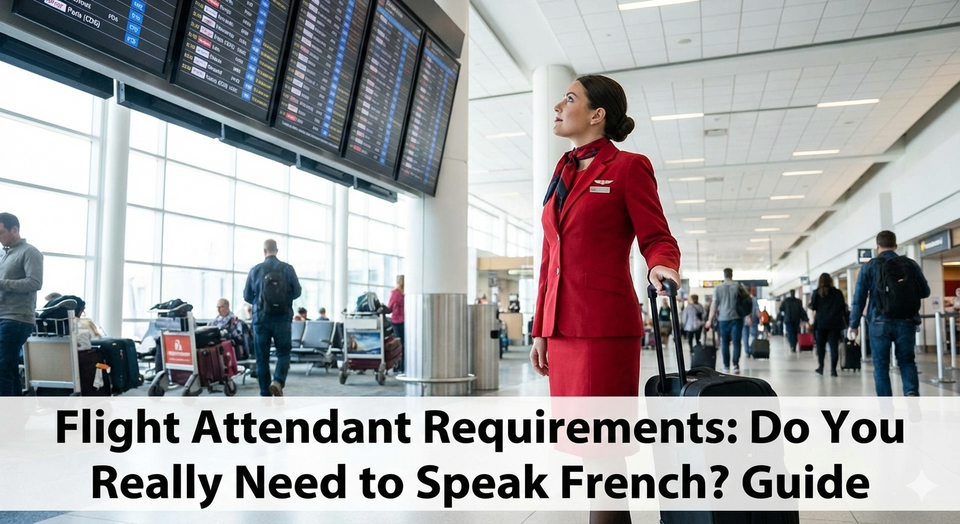
If you scroll through TikTok, being a Flight Attendant looks like a dream. You see layovers in Paris, selfies in uniform, and free travel perks.
You don't see the 8 weeks of unpaid training, the 3:00 AM wake-up calls, or the reality of sharing a basement apartment with four other crew members because you can't afford rent in Toronto.
In 2026, the Canadian aviation industry is going through a massive shift. The unions (CUPE) have finally won some battles regarding "Ground Pay" (getting paid for boarding), but the job remains one of the most physically and mentally demanding entry-level roles in the country.
But the number one question that stops most applicants in their tracks is: "Do I need to speak French?"
The short answer is No, but it depends entirely on which airline you choose.
This guide breaks down the strict language requirements of Air Canada vs. WestJet, explains the complex "Block Hour" pay system, and reveals the gritty truth about "Reserve Life" that recruiters won't tell you.
Prefer to keep your feet on the ground? Check out Canada Post Holiday Sorting for seasonal work or TD Bank Teller for a stable 9-5.
The "French" Question: Air Canada vs. WestJet
In Canada, we have two different airline cultures when it comes to language.
1. Air Canada (The "Bilingual" Giant)
- The Law: As Canada's flag carrier, Air Canada is subject to the Official Languages Act. This means they are legally required to offer service in English and French on almost every flight.
- The Requirement: They list "Bilingualism" as Preferred, but in reality, it is Essential for 80% of new hires.
- The Loophole: Can you get hired with English only? Yes.
- However: You will likely be based in Vancouver (YVR) or Toronto (YYZ). You will almost never get based in Montreal (YUL).
- Priority: Bilingual candidates get hired first. If there are 1,000 applicants and 500 speak French, the English-only candidates are pushed to the bottom of the pile.
- The Test: If you claim you speak French, you will be tested. It isn't just "Bonjour." You need to be able to explain safety procedures and handle a medical emergency in French.
2. WestJet / Porter / Sunwing (The "English" Standard)
- The Law: These are private companies not bound by the same strict Official Languages Act rules as Air Canada.
- The Requirement: English is mandatory. French is an asset, but NOT required.
- The Reality: The vast majority of WestJet crews (especially out of Calgary/YYC) speak English only.
- Other Languages: They actually value other route-specific languages highly.
- Example: If you speak Japanese, you are a goldmine for flights to Tokyo. If you speak Spanish, you are perfect for Sunwing vacations to Mexico.
Verdict: If you don't speak French, apply to WestJet or Porter first. If you apply to Air Canada, expect a harder battle.
The Pay: "Block Hours" vs. "Ground Pay" (2026 Update)
Flight Attendant pay is the most confusing payroll system in the world. You are not paid for every hour you are at work.
1. Block Hours (The Old Way)
- Traditionally, you are only paid from "Chock to Chock" (when the brakes are released at the gate to when they are set at the destination).
- The Problem: If you show up 1 hour early for briefing, board 200 passengers for 45 minutes, and sit on the tarmac for a 2-hour delay... you used to get paid $0.00 for that time.
2. The 2026 "Ground Pay" Victory (Air Canada)
- The Change: As of the latest union agreement (Aug 2025), Air Canada flight attendants now get Ground Pay.
- The Rate: It is approx 50% - 60% of your hourly flight rate.
- The Rule: You get paid for the boarding and deplaning process (usually capped at 60-70 minutes per flight).
- Impact: This adds roughly $5,000 - $8,000 to a new hire's annual salary compared to 2024.
3. The Pay Scale (Estimates)
- Starting Rate: $28 - $32 per flight hour.
- Monthly Guarantee: Most airlines guarantee ~75-80 hours of pay per month, even if you fly less.
- Per Diem: Tax-free cash allowance for meals when you are away from base (approx $4 - $5 per hour away). This is where the "hidden" money is.
- Total Year 1 Income: $35,000 - $45,000. (It is barely a living wage in Toronto).
The Training: 8 Weeks of Boot Camp
This is the filter. 30% of people quit or fail during training.
1. Unpaid vs. Paid
- WestJet: Historically, training was Unpaid, but you received a small stipend/per diem.
- Air Canada: Usually provides a small training wage (often minimum wage equivalent) + accommodation.
- The Reality: You are studying 12 hours a day for 8 weeks. You cannot work a second job. You need to have $3,000 - $5,000 saved up to survive training.
2. The "90%" Pass Mark
- You will have exams every day on Safety Procedures, First Aid, and Aircraft Specifics (e.g., How to open the door of a Boeing 787 vs. an Airbus A321).
- The Pressure: If you score 89% on a critical safety exam, you fail. If you fail two exams, you are sent home.
- Service: You spend maybe 2 days learning how to pour coffee. The other 38 days are about fighting fires, evacuating slides, and shouting commands.
Deep Dive: "Reserve" Life (The On-Call Nightmare)
When you graduate, you do not get a schedule. You get "Reserve."
1. What is Reserve?
- You are "On Call" for 18-20 days a month.
- The Rule: You must be able to report to the airport within 90 Minutes (sometimes 60) of the phone ringing.
- The Phone Call: Crew Scheduling can call you at 2:00 AM for a 4:00 AM check-in. If you miss the call, you are in trouble.
2. The Lifestyle
- You cannot plan birthdays, weddings, or dates. You are property of the airline.
- Reserve Blocks: You might be on "AM Reserve" (4am - 4pm) or "PM Reserve" (4pm - 4am).
- Duration: At major bases (Toronto), you might be on Reserve for 5-10 years before you have enough seniority to hold a "Block" (Set Schedule).
3. "Crashpads" (How to Survive Rent)
- Since you only earn $35k and live in Toronto, you cannot afford an apartment.
- The Solution: A Crashpad.
- What is it? An apartment near the airport with 6-10 bunk beds.
- Cost: $300 - $500/month.
- The Vibe: It is a dorm for adults. You sleep there when you are on reserve. When you have days off, you fly home to your real house (in Halifax, Ottawa, etc.).
Physical & Medical Requirements
It’s not just about smiling.
1. The Reach Test
- You must be able to reach emergency equipment in the overhead bins.
- Standard: Usually 212 cm (approx 7 feet).
- The Catch: You can stand on tiptoes, but you cannot wear shoes. Practice at home: Put a piece of tape 212cm up a wall. If you can't touch it, you won't get hired.
2. Medical Clearance
- Ears/Sinuses: You must be able to clear your ears (equalize pressure). If you have chronic sinus issues, you will be grounded.
- Drug Testing: Pre-employment drug screening is standard. Cannabis is legal in Canada, but airlines have strict "28 Day" or "Zero Tolerance" policies for flight crew due to safety regulations.
3. Tattoos (The 2026 Update)
- Old Rule: No visible tattoos.
- New Rule (Air Canada/WestJet): Visible tattoos are increasingly allowed on arms/legs, as long as they are not offensive (hate symbols, nudity).
- Face/Neck: Still a hard NO.
"Commuting" (Living in Halifax, Working in Toronto)
Many Flight Attendants do not live in their base city.
- How it works: You live in Halifax. Your base is Toronto.
- The Commute: You fly standby (for free) from Halifax to Toronto the night before your Reserve block starts.
- The Risk: If the flight is full, and you can't get to Toronto, you miss your shift. This is a "Commuter Failure" and can get you fired.
- The Cost: You pay for a Crashpad in Toronto and your Rent in Halifax. It is expensive.
Practical Questions Answered
The galley gossip.
"Is the height requirement strict?"
YES.
- They will measure you on Day 1 of the interview.
- Too Short: You fail the reach test.
- Too Tall: If you are over 6'2" (188cm), you might be uncomfortable stooping in the cabin, but there isn't usually a hard "maximum" height unless you physically hit the ceiling.
"Do we really have to clean the toilets?"
Yes.
- You are not a janitor, but during the flight, you must do "Lavatory Checks."
- Tasks: Restocking toilet paper, wiping the sink, and spraying air freshener. If someone makes a massive mess, you might have to lock the door and designate it "Out of Order."
"Is it lonely?"
Surprisingly, yes.
- You meet hundreds of people, but you say goodbye every day.
- The "Click": You become best friends with your crew for 3 days, tell them your deepest secrets, and then never see them again. It is a strange social dynamic.
Summary: A Lifestyle, Not a Job
- Assess Your Language: If you speak French, aim for Air Canada. If not, target WestJet or Porter.
- Save Your Money: You need a financial cushion for the 8 weeks of training and the first year of low pay.
- Prepare for Reserve: Understand that you will not have control over your life for the first few years.
- Do the Reach Test: Don't waste your time applying if you can't touch the 212cm mark.
About the author
Jeff Calixte (MC Yow-Z) is a Canadian career researcher and digital entrepreneur who studies hiring trends, labour market data, and real entry-level opportunities across Canada. He specializes in simplifying the job search for newcomers, students, and workers using practical, up-to-date information.
Sources
- Air Canada Careers: Language and height requirements. https://careers.aircanada.com/
- WestJet Careers: Cabin crew qualifications and bases. https://www.westjet.com/en-ca/careers
- CUPE (Canadian Union of Public Employees): Updates on airline collective agreements and ground pay. https://cupe.ca/
Note
Job availability, wages, and hiring conditions can vary widely by province, employer, season, and experience level. All salary ranges and job examples in this guide are estimates based on current labour market data. Always confirm details directly with the employer before applying.