
Fly-In Fly-Out Jobs Canada: Who Pays for Your Flights?
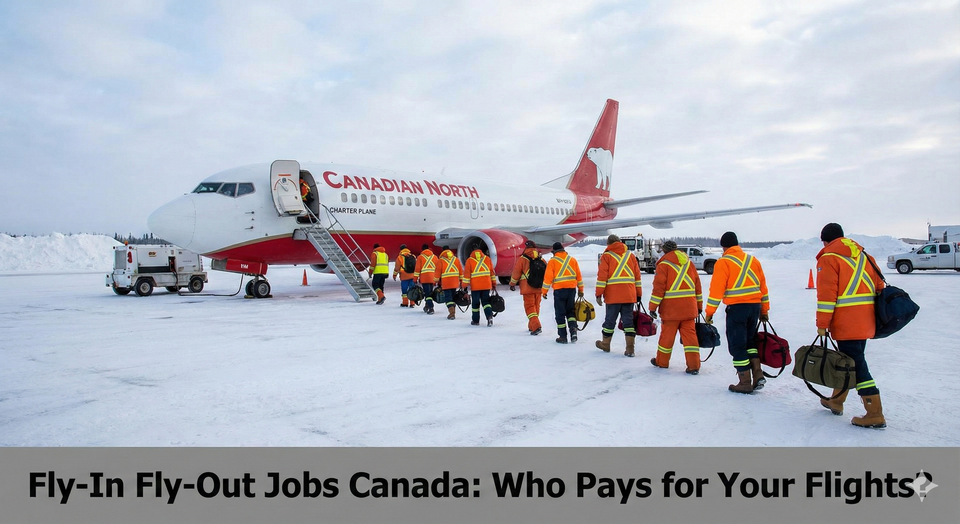
The dream of the Fly-In Fly-Out (FIFO) lifestyle is simple: You live where you want, you fly to work, and you make massive money.
But for newcomers to Canada or first-time applicants, the job postings are confusing. They say "Travel Provided," yet people on Reddit are complaining about spending $500 to get to work.
Here is the reality: No one is flying you from Toronto to Fort McMurray for an entry-level job.
While skilled tradespeople (Welders, Heavy Duty Mechanics) might get "door-to-door" travel perks, 90% of no-degree jobs in the oil sands operate on the "Hub City" model. If you don't understand this rule, you could lose half your paycheck in travel costs before you even punch the clock.
Whether you are looking for high-paying jobs in the kitchen or on the rig floor, you need to master the logistics of FIFO travel.
Here is the definitive guide to who pays for your flights in the Canadian industrial sector.
1. The "Hub City" Rule (The most important concept)
This is the industry standard for 2026.
Employers will pay for your travel only from specific cities. These are called "Hubs."
- Alberta Hubs: Edmonton (YEG) and Calgary (YYC).
- BC Hubs: Vancouver (YVR) and Kelowna (YLW).
- East Coast Hubs: Halifax (YHZ) and St. John’s (YYT) – Only for offshore or specific projects.
How it works:
- You pay to get yourself to the Hub City (e.g., You fly from Toronto to Edmonton on your own dime).
- The Company pays for the charter flight from the Hub to the work site (e.g., Edmonton to Firebag Aerodrome).
The Trap: If you live in Toronto and get a job that pays $25/hour in Fort McMurray, but you have to pay $600/week to fly yourself to Edmonton, you are actually making less than minimum wage. Do not take a FIFO job unless you live near a Hub or the pay is high enough to cover your commute.
2. Types of Travel Compensation
When reading a job offer, look for these three terms. They determine your bank account balance.
A. "Charter Flight Provided" (The Gold Standard)
This is the easiest method.
- What it is: The company books a private plane (Canadian North, Suncor Energy fleet, or North Cariboo Air).
- Cost to you: $0.
- Logistics: You show up at a private terminal (not the main airport terminal) at 5:00 AM. You scan your badge, check your bag, and get on the plane.
- Best for: No-experience camp jobs like housekeeping and dishwashing.
B. "Travel Allowance" / "Travel Pay"
This is common for contractors who drive or fly commercially.
- What it is: The company gives you extra money on your paycheck to "cover" your travel.
- Example: You get an extra $300 per rotation tax-free.
- The Risk: If gas prices go up or you book a last-minute flight that costs $500, you lose money. You must be a smart budgeter to make this work.
C. "Hot Shot" / "Drive In"
- What it is: There is no flight. You are expected to drive your own truck to the site.
- Common in: Northern BC (forestry) or Grande Prairie (fracking).
- The Warning: Do not do this in a Honda Civic. These are logging roads. You need a 4x4 truck with a VHF radio. If you wreck your truck, the "allowance" won't cover it.
3. The "Private Terminal" Experience
Flying FIFO is not like flying Air Canada. It is strictly business.
- The Terminals: In Edmonton, you don't go to YEG Main Terminal. You go to the Executive Flight Centre or Suncor Hangar.
- The Security: It is faster than commercial security, but they are stricter on contraband.
- Drug Dogs: Sniffer dogs check bags for drugs and alcohol. Most camps are "Dry" (Zero Alcohol). If a dog sits on your bag, you are fired before you take off.
- Prohibited Items: No protein powder tubs (must be factory sealed), no weapons, no glass bottles.
- The Baggage Limit: Strict weight limits apply.
- Standard: 40-50 lbs checked bag + 15 lbs carry-on.
- The Catch: Because you are bringing steel-toe boots and winter gear, your bag gets heavy fast. Weigh it at home. If you are over, they might leave your bag behind.
4. LOA (Living Out Allowance) vs. Camp
This is a tax term you must know.
Option A: Camp (The Saver)
- You stay in the lodge.
- Food and bed are free.
- Tax Benefit: None (because you aren't paying for anything).
Option B: LOA (The Earner)
- The company pays you $150 - $200 per day tax-free to find your own food and housing.
- Why do it? If you rent a cheap room in Fort McMurray for $50/night and eat Kraft Dinner, you can pocket the extra $100/day tax-free.
- Who does it? Experienced tradespeople who hate camp rules and want to bring their own truck.
- Internal Link: This is similar to the "Per Diem" model in trucking jobs.
5. Who Hires "Door-to-Door"? (The Elite List)
Is it possible to get flown from Toronto or Newfoundland for free?
Yes, but only for specific roles.
- Specialized Trades: If you are a specialized Shutdown Welder or High-Pressure Pipefitter, unions (like UA Local 488) may negotiate flights from across Canada because there is a shortage of workers.
- Offshore Rigs (Newfoundland): If you work on the Hibernia or Hebron platforms, flights are usually covered from St. John’s. If you are a specialist engineer, they might fly you from Halifax.
- Diamond Mines (NWT/Nunavut): Mines like Diavik or Ekati often have pickup points in Yellowknife, Edmonton, and sometimes Vancouver.
For a Dishwasher or Laborer, do not expect this. You must move to the Hub.
6. Comparison Table: Commercial vs. Charter Travel
| Feature | Commercial Flight (Air Canada) | Charter Flight (Canadian North) |
| Who Pays? | Usually You (to get to Hub) | Company (Hub to Site) |
| Terminal | Main Airport | Private Hangar |
| Security | TSA Style | Drug Dogs / Sniffer |
| Alcohol | Allowed | Banned |
| Schedule | Fixed | Can change instantly |
| Cost to You | $$$ | Free |
Practical Questions Answered
"Am I paid for the travel time?"
Consensus: NO.
This is the biggest complaint.
- The Reality: If your flight is at 6:00 AM, you are at the airport at 4:30 AM. You land at 7:30 AM. You take a bus for 1 hour to camp. You check in. You start work at 7:00 AM the next day.
- The Pay: You usually do not get paid an hourly wage until you swipe your badge at the work site. That 5-hour travel day is unpaid "volunteer" time.
- Exception: Some union contracts pay a fixed "Travel Hour" (e.g., 2 hours pay) to compensate for the hassle.
"What if the plane is delayed?"
You wait.
Weather in Northern Alberta is brutal. If the plane can't land due to fog, you might sit in the terminal for 8 hours.
- Do you get paid? No.
- Do you lose your job? No, the whole crew is delayed.
"Can I bring my gaming PC?"
Technically yes, but risky.
Baggage handlers on charters are rough.
- Advice: Bring a gaming laptop or a console (Xbox/PS5). Do not bring a full tower and monitor. It will get smashed.
Frequently Asked Questions
What is the "Turnaround" schedule?
A "Turnaround" or "Shutdown" is a short-term project (30–60 days) where a plant shuts down for maintenance. These jobs often have the wildest schedules (e.g., 24 days on, 4 days off) and the highest pay. Because they need people urgently, these are the jobs most likely to offer travel allowances for out-of-province workers.
Do I get my own room in camp?
Yes. Modern camps (like Wapasu or Beaver River) use "Jack and Jill" style rooms. You have your own private bedroom, but you share a bathroom with one neighbor. You have your own TV and Wi-Fi. It is not a barracks; it is more like a college dorm.
How do I get to the Hub City if I'm broke?
This is the "Catch-22." You need money to fly to Edmonton to get the job to make money.
- The Solution: Many workers start with temp agency jobs in their home city to save the $500 for the initial flight. Do not take a loan to get to the oil sands; ensure you have a signed offer letter first.
Are flights tax deductible?
Sometimes. If your employer requires you to travel and does not reimburse you, and you live in a different location than your work, you may be able to claim travel expenses on your taxes (Form T2200). However, the CRA rules for "Northern Residents Deductions" are strict. Consult a tax professional who specializes in oilfield workers.
About the author
Jeff Calixte (MC Yow-Z) is a Canadian career researcher and digital entrepreneur who studies hiring trends, labour market data, and real entry-level opportunities across Canada. He specializes in simplifying the job search for newcomers, students, and workers using practical, up-to-date information.
Sources
- Suncor Energy (Travel & Logistics): https://sunlink.suncor.com/travel/portal
- Canadian North (Charter Services): https://canadiannorth.com/
- Canada Revenue Agency (Northern Residents Deductions): https://www.canada.ca/en/revenue-agency/services/tax/individuals/topics/about-your-tax-return/tax-return/completing-a-tax-return/deductions-credits-expenses/line-25500-northern-residents-deductions.html
Note:
Job availability, wages, and hiring conditions can vary widely by province, employer, season, and experience level. All salary ranges and job examples in this guide are estimates based on current labour market data. Always confirm details directly with the employer before applying.