
Highest-Paying Trade Careers You Can Start With No Degree (2026 List)
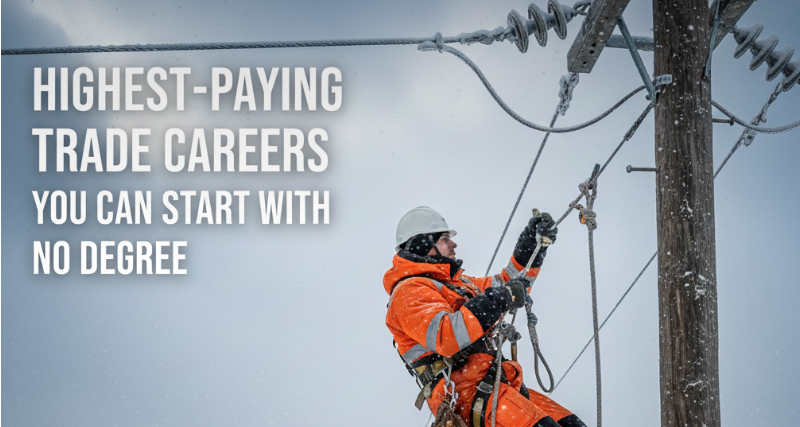
If you think "Trade Jobs" just means unclogging toilets, you are missing out on the biggest wealth transfer in Canadian history.
In 2026, the "University Bubble" has burst. While graduates with Business degrees fight for $60k jobs, Skilled Tradespeople are earning **$45 to $65 per hour**—plus overtime, pension, and benefits.
The shortage of workers is so severe that unions are actively recruiting beginners. You start as an apprentice (getting paid to learn), and within 4–5 years, you earn more than most doctors.
Here are the top 7 highest-paying trades in Canada that you can start today without a degree.
1. Elevator Mechanic (The "King" of Trades)
This is widely considered the highest-paid blue-collar job in the world.
- The Job: Installing, maintaining, and repairing elevators and escalators.
- The Pay: Journeymen earn $55 – $65 per hour. With overtime (emergency calls), it is common to clear $130,000+ per year.
- The Entry: Extremely competitive. You typically apply through the IUEC (International Union of Elevator Constructors) during their intake periods.
- Why it pays so much: It is high-risk, high-skill, and you hold people's lives in your hands.
2. Powerline Technician (The "Hero" Trade)
If you aren't afraid of heights or bad weather, this is the job for you.
- The Job: Building and fixing the high-voltage electrical grid. When a storm knocks out power, you go up the pole to fix it.
- The Pay: $50 – $60 per hour. Storm chasers (who travel to disaster zones) can make $200,000 in a good year.
- The Entry: You usually need a 2-year college diploma or get hired as a "Groundman" helper and work your way up.
- Internal Link: Learn about Fly-In Fly-Out Jobs since many linemen work in remote areas.
3. Crane Operator (The "Joystick" Job)
You sit in a heated cab 500 feet in the air and move steel with a joystick.
- The Job: Operating tower cranes or mobile cranes on construction sites.
- The Pay: $45 – $55 per hour.
- The Reality: It is mentally exhausting. You cannot make a mistake, or people die. But physically, it is one of the easiest trades.
- The Entry: Get your "Boom Truck" (0-8 Ton) ticket first, then upgrade to Mobile or Tower Crane.
4. HVAC & Refrigeration Mechanic (The Steady Earner)
Every condo, grocery store, and office tower needs AC and freezers.
- The Job: Installing massive commercial cooling systems.
- The Pay: $45 – $52 per hour.
- Why it wins: It is recession-proof. When a restaurant's freezer breaks, they must fix it immediately, leading to huge overtime pay.
- Link: This pairs well with Construction Labourer Jobs as a starting point.
5. Industrial Electrician (Not Residential)
Don't wire houses; wire mines and factories.
- The Job: Maintaining the massive robots, conveyors, and generators in manufacturing plants or mines.
- The Pay: $42 – $50 per hour.
- The Perk: Unlike construction electricians (who get laid off when the building is done), industrial electricians often have permanent, full-time jobs at one facility.
6. Steamfitter / Pipefitter (The Oil Patch Choice)
This is the backbone of the oil and gas industry.
- The Job: Installing high-pressure pipes that carry steam, oil, or chemicals.
- The Pay: $45 – $55 per hour. In Alberta (Fort McMurray), "shutdown" work can pay massive daily rates.
- Internal Link: Many of these jobs are No Experience Camp Jobs for helpers.
7. Sprinkler Fitter (Fire Protection)
A niche trade that nobody talks about.
- The Job: Installing fire suppression systems in ceilings.
- The Pay: $45 – $50 per hour.
- Why apply: It has one of the strongest unions (UA) and fewer applicants than plumbing or electrical, meaning less competition for apprenticeships.
Comparison Table: Trades Salary vs. Education Cost
| Trade | Top Hourly Wage | Education Cost | Time to Certified |
| Elevator Mechanic | $62.00 | $0 (Paid Training) | 4 Years |
| Powerline Tech | $58.00 | $5,000 (College) | 4 Years |
| Crane Operator | $52.00 | $15,000 (Course) | 1-2 Years |
| Plumber | $48.00 | $0 (Apprenticeship) | 5 Years |
| University Grad | $32.00 (Avg) | $40,000 (Tuition) | 4 Years |
Practical Questions Answered
"Is it hard on your body?"
Yes.
- The Reality: Knees and backs carry the cost of these salaries.
- The Strategy: The goal is to work "on the tools" for 15 years, then move into Project Management, Estimating, or Safety Inspection (where you make the same money sitting in a truck).
"How do I start with zero experience?"
Start as a Helper.
You cannot just apply to be a Powerline Technician. You apply to be a "Groundman" or "Labourer."
- The Path: Work hard for 6 months, show up on time, and ask the foreman to sponsor your apprenticeship.
- Internal Link: Check our guide on Apprenticeship Grants to see how the government pays you to learn.
"Are these jobs seasonal?"
Some are.
- Seasonal: Powerline (busy in storms), Construction (slower in winter).
- Steady: Elevator, HVAC, and Industrial Maintenance are year-round.
Frequently Asked Questions
What is a "Red Seal"?
The Red Seal is the "Gold Standard" certification. It means your license is recognized across all of Canada. If you are a Red Seal Plumber in Ontario, you can move to Alberta and start working tomorrow without re-testing. It maximizes your earning potential.
Are women welcomed in these trades?
Yes.
Unions and companies are desperate to diversify. Organizations like Women Building Futures (Alberta) and Women in Trades offer free tuition and guaranteed job placements specifically for women entering these high-paying fields.
Which trade is the easiest to learn?
Painting or Drywall Taping are physically repetitive but technically easier to learn than Electrical or HVAC. However, because the barrier to entry is lower, the pay is also lower ($30–$35/hr max).
About the researcher
Jeff Calixte (MC Yow-Z) is a Canadian career researcher and digital entrepreneur. He tracks real-time labour market data, government hiring trends, and entry-level opportunities to help newcomers and students navigate the Canadian job market.
Data Sources & References
- Statistics Canada (Wages by Occupation): https://www150.statcan.gc.ca/t1/tbl1/en/tv.action?pid=1410041701
- International Union of Elevator Constructors (IUEC): https://unionpayscales.com/trades/iuec-elevator-installers/
- Government of Canada (Red Seal Program): https://www.canada.ca/en/employment-social-development/programs/skilled-trades-apprenticeships.html
Note:
Job availability, wages, and hiring conditions can vary widely by province, employer, season, and experience level. All salary ranges and job examples in this guide are estimates based on current labour market data. Always confirm details directly with the employer before applying.