
Jobs That Are Always Hiring in Canada (Recession-Proof List 2026)
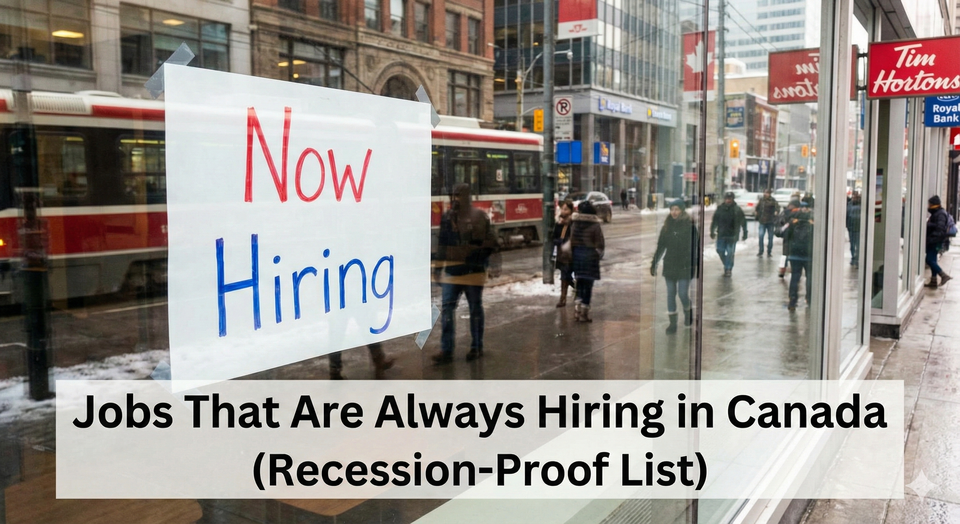
In a shaky economy, "Job Security" becomes more important than a high salary.
While tech companies and startups might do layoffs, there are specific sectors in Canada that are always desperate for bodies. These industries usually have one of two things:
- Infinite Demand: (e.g., An aging population needs more care every day).
- High Turnover: (e.g., People quit often, so new spots open daily).
In 2026, if you want a job that you can land quickly—and keep even if the economy crashes—these are your safest bets.
1. Personal Support Worker (PSW) / Care Aide
This is the #1 "Always Hiring" job in Canada.
- The Reality: Canada’s population is getting older. Nursing homes and home-care agencies have a chronic shortage of staff.
- Why it’s safe: Old people need care whether the stock market is up or down.
- The Pay: $19 – $27 per hour (Government-subsidized raises in Ontario/BC have boosted this).
- Availability: You could likely get 3 job offers by the end of this week.
- Internal Link: If you want to live in, check out Live-in Caregiver Jobs.
2. Security Guard
The ultimate "Second Career" for newcomers and students.
- The Reality: Every condo, mall, hospital, and construction site needs 24/7 monitoring.
- Why it’s safe: Insurance companies require businesses to have security. They cannot fire the guards, or their insurance gets cancelled.
- The Pay: $17 – $22 per hour.
- Availability: Massive turnover means companies like GardaWorld, Paladin, and Commissionaires are perpetually hiring.
- Internal Link: Learn how to get licensed in our Security Guard Guide.
3. Warehouse Worker (E-Commerce)
As long as people buy things online, these jobs will exist.
- The Reality: Amazon, Walmart, and Canadian Tire have distribution centers that run 24/7.
- Why it’s safe: Even in a recession, people buy toilet paper, food, and cheap goods from Amazon.
- The Pay: $19 – $24 per hour.
- Availability: Peak seasons (Christmas/Prime Day) see thousands of hires, but "churn" keeps the door open year-round.
- Internal Link: Check out Night Shift Jobs for higher pay in this sector.
4. Sales Representative (Commission)
Companies always need someone to bring in money.
- The Reality: This includes car sales, insurance, and "door-to-door" (telecom) sales.
- Why it’s safe: Most sales jobs have a low base salary. You pay for yourself. If you are good, you are untouchable. If you are bad, you quit. This cycle keeps hiring open forever.
- The Pay: $40,000 – $100,000+ (Performance based).
5. Call Center Agent (BPO)
The job everyone loves to hate, but it pays the bills.
- The Reality: Banks and Telecoms outsource their support to agencies like Concentrix or Teleperformance.
- Why it’s safe: Customer complaints never stop.
- The Pay: $17 – $21 per hour.
- Availability: High burnout rate means they are always recruiting new training classes every Monday.
- Internal Link: Many of these are now Remote Jobs.
6. Waste Management (Garbage/Recycling)
The dirty secret of job stability.
- The Reality: Trash needs to be picked up every week. Period.
- Why it’s safe: It is an essential service. Cities cannot stop collecting garbage.
- The Pay: $22 – $28 per hour (Loaders/Drivers).
- Availability: It is physically hard, so people often move on to easier driving jobs, creating openings for beginners.
7. Line Cook / Fast Food
- The Reality: Restaurants have the highest turnover of any industry.
- Why it’s safe: People still eat cheap food in a recession. McDonald's and Tim Hortons actually get busier when the economy is bad because people switch from expensive steak dinners to cheap burgers.
- The Pay: $16 – $19 per hour.
Comparison Table: Stability vs. Stress
| Job Title | Stability (Layoff Risk) | Stress Level | Hiring Speed |
| PSW / Care Aide | Zero Risk | High | Immediate |
| Security Guard | Very Low Risk | Low (Boring) | Fast |
| Warehouse | Low Risk | Medium | Fast |
| Sales Rep | Medium Risk | Very High | Immediate |
| Call Center | Low Risk | High | Fast |
Practical Questions Answered
"Are these 'Dead End' jobs?"
Not necessarily.
- The Path: A Security Guard becomes a Supervisor or Police Officer. A Warehouse Packer becomes a Logistics Manager. A PSW becomes a Practical Nurse (LPN). These are "stepping stone" jobs.
"Why is the turnover so high?"
Burnout.
- The Truth: Being a Call Center agent is mentally draining. Being a PSW is physically exhausting. The jobs are always hiring because people get tired and leave. If you have stamina, you can rise to management quickly because you are the "last one standing."
"Do I need a degree?"
No.
None of the jobs on this list require a university degree. Most just require a high school diploma and a clean background check.
Frequently Asked Questions
Which province has the most openings?
Ontario and Alberta.
Ontario has the population (Health/Warehousing), and Alberta has the industrial demand.
Is "Seasonal" work stable?
No.
Avoid "Seasonal" retail (like Halloween stores) or landscaping if you want recession-proof stability. Stick to "Essential Services" (Health, Food, Safety).
Can I get these jobs with a criminal record?
Construction and Warehousing: YES.
Security and PSW: NO. You need a clean record for vulnerable sector work.
About the author
Jeff Calixte (MC Yow-Z) is a Canadian career researcher and digital entrepreneur. He tracks real-time labour market data, government hiring trends, and entry-level opportunities to help newcomers and students navigate the Canadian job market.
Sources
- Job Bank Canada (Trend Analysis): https://www.jobbank.gc.ca/trend-analysis
- GardaWorld Careers: https://jobs.garda.com/
- Ontario PSW Association: https://opswa.com/
Note:
Job availability, wages, and hiring conditions can vary widely by province, employer, season, and experience level. All salary ranges and job examples in this guide are estimates based on current labour market data. Always confirm details directly with the employer before applying.