
Best Recession-Proof Jobs in Canada (Safe Careers 2026)
In an unstable economy, "Passion" often takes a backseat to "Security."
We have all seen the headlines: Tech layoffs, retail closures, and hiring freezes. When a recession hits, luxury services (like marketing, travel, and fine dining) are the first to be cut.
But there are certain industries that cannot stop.
These are the "Essential Services." No matter how bad the economy gets, Canadians still need electricity, clean water, garbage removal, and emergency healthcare. These jobs are immune to stock market crashes. In fact, some of them actually hire more during hard times.
If you want a paycheck that never bounces, here are the safest, most recession-proof jobs in Canada for 2026.
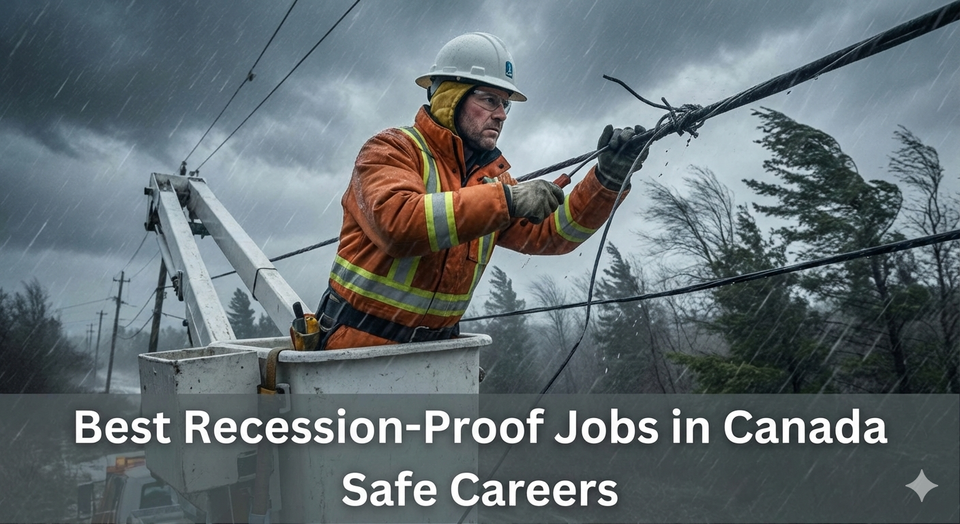
1. Utility Worker (Water / Hydro / Gas)
The ultimate safety net.
- The Job: Maintaining the power grid, fixing water mains, or checking gas meters.
- Why it’s Safe: People might cancel their Netflix subscription in a recession, but they will never cancel their heat or water. These companies (Hydro One, Enbridge, Epcor) are government-backed monopolies.
- The Pay: $28 – $45 per hour (Strong Unions).
- Entry Point: Look for "Meter Reader" or "Groundskeeper" roles to get your foot in the door. Entry Point: Look for "Meter Reader" or "Groundskeeper" roles to get your foot in the door. If you prefer working with your hands outdoors, check out our guide on Best Outdoor Jobs in Canada.
2. Waste Management (Garbage Collector)
- The Job: Driving the garbage truck or working at the recycling plant.
- Why it’s Safe: Trash never stops. In fact, when people stay home more (during recessions), they produce more residential trash.
- The Pay: $26 – $32 per hour.
- The Stability: Most waste contracts are municipal (City) jobs. Layoffs are almost unheard of.
3. Personal Support Worker (PSW) / Health Aide
- The Job: Caring for the elderly in Long-Term Care (LTC) homes.
- Why it’s Safe: Canada’s population is aging. Recession or not, grandmothers need care. The government is currently subsidizing training because the shortage is so severe.
- The Pay: $22 – $28 per hour. This role is a great stepping stone into healthcare without needing a degree, similar to the roles we cover in Best Hospital Jobs (No Medical Degree).
- Bonus: You can often get your tuition paid for by the government (e.g., Ontario's PSW Challenge Fund).
4. Property Restoration (Disaster Cleanup)
- The Job: Cleaning up after floods, fires, or mold.
- Why it’s Safe: Disasters don't care about the economy. If a pipe bursts in a basement, the homeowner must fix it immediately to save the house. Insurance pays the bill, not the homeowner, so the money is always there.
- The Pay: $20 – $30 per hour.
- Top Companies: SERVPRO, First Onsite.
5. Security Guard (specific sectors)
- The Job: Guarding grocery stores, condos, or hospitals.
- Why it’s Safe: In tough economic times, theft and crime often increase. Retailers hire more loss prevention officers, not fewer.
- The Pay: $17 – $25 per hour.
- Related: See our guide on Getting Your Security License.
6. Mechanic (Repair > Sales)
- The Job: Fixing cars.
- Why it’s Safe: In a recession, people stop buying new cars. They keep their old clunkers longer. This means they spend more money on repairs.
- The Pivot: If you sell cars, you are in trouble. If you fix them, you are rich.
- The Pay: $25 – $40 per hour. If you have mechanical skills but want to work in a different environment, you might also likeHeavy Duty Mechanic roles in Mining.
7. Insurance Broker / Advisor
- The Job: Selling home and auto insurance.
- Why it’s Safe: Car insurance and home insurance are mandatory by law in Canada. You cannot drive without it. It is steady, recurring revenue.
- The Pay: $50,000 Base + Commission.
Comparison Table: Volatility vs. Safety
| Industry | Recession Risk | Hiring Trend (Downturn) | Pay Stability |
| Tech / Marketing | High | Firing | Low |
| Utilities | Zero | Stable | Very High |
| Healthcare | Zero | Hiring | Very High |
| Luxury Retail | High | Firing | Low |
| Waste Mgmt | Zero | Stable | High |
| Car Repair | Low | Hiring | High |
Practical Questions Answered
"Are government jobs actually safe?"
Federal/Provincial: YES. Municipal: MOSTLY.
- The Nuance: "Permanent" government employees are almost impossible to fire. However, "Contract" government workers are the first to be cut when budgets get tight. Always aim for "Indeterminate" (Permanent) status.
"Is grocery a safe job?"
Yes, but low pay.
- The Trade-off: Grocery stores (Loblaws, Sobeys) are recession-proof because people always eat. However, they usually pay near minimum wage. It is "Safe Poverty." Aim for Warehousing or Trucking for the grocery chains instead—same safety, double the pay.
"What about trades?"
Service Trades are safer than Construction Trades.
- The Distinction:
- New Construction (Building Condos): Risky. If interest rates go up, building stops.
- Service (Fixing Toilets/Furnaces): Safe. If a toilet breaks, it gets fixed today. Become a Service Plumber, not a Construction Plumber.
Frequently Asked Questions
Is Police/Fire/EMS recession-proof?
Yes.
Emergency services are the definition of essential. They are never laid off. However, hiring freezes can happen where they stop recruiting new classes, but they rarely fire existing officers.
Are teachers safe?
Generally, Yes.
Schools are open regardless of the economy. However, teachers with low seniority ("Occasional Teachers") might get fewer shifts if class sizes are increased to save money.
What is the most dangerous industry in a recession?
Construction (Residential) and Hospitality.
When people have no money, they don't eat at restaurants and they don't buy new houses. Avoid these if you fear a crash.
About the author
Jeff Calixte (MC Yow-Z) is a Canadian career researcher and digital entrepreneur. He tracks real-time labour market data, government hiring trends, and entry-level opportunities to help newcomers and students navigate the Canadian job market.
Sources
- Electricity Human Resources Canada: https://electricityhr.ca/
- Waste & Recycling Magazine (Industry Trends): https://www.waste360.com/
- Job Bank (Outlook Reports): https://www.jobbank.gc.ca/trend-analysis
Note:
Job availability, wages, and hiring conditions can vary widely by province, employer, season, and experience level. All salary ranges and job examples in this guide are estimates based on current labour market data. Always confirm details directly with the employer before applying.