
Rover vs. Wag: How to Make Money Walking Dogs in Canada
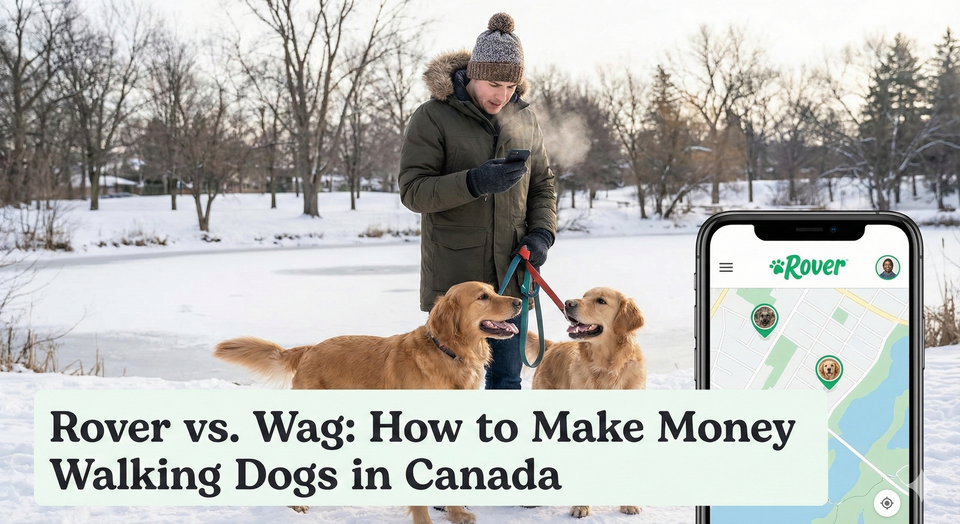
If you watch American YouTubers, you might think Wag! is a massive platform where you can pick up dog walks on-demand like an Uber driver.
In Canada, that is a myth.
While Wag! technically operates here, the Canadian market is almost 95% dominated by Rover. If you sign up for Wag in Toronto or Calgary, you will likely stare at a blank screen for weeks. If you sign up for Rover, you could be fully booked by next weekend.
But "getting paid to walk dogs" isn't as simple as it looks on Instagram. It involves serious liability, 20% commission fees, and walking in -25°C blizzards.
Whether you are a student looking for weekend jobs or a retiree wanting to stay active, here is the definitive guide to making money in the Canadian pet economy.
1. The Verdict: Why Rover Won Canada
In the US, Wag and Rover are rivals. In Canada, Rover is the monopoly.
- The "Ghost Town" Factor: Wag’s "on-demand" model (walks ASAP) never took off here. Canadians prefer the "Meet & Greet" model where they meet the walker first.
- The Rover Acquisition: Years ago, Rover bought its main competitor, DogVacay. Since then, they have controlled the entire Canadian market.
- Consensus Verdict: Ignore Wag. Do not pay their application fee. Focus 100% of your energy on building a stellar Rover profile.
2. How Much Money Can You Actually Make?
You set your own rates, but the market dictates what you can charge.
The 2026 Price List (Toronto/Vancouver Rates)
- 30-Minute Walk: $20 – $28
- Drop-In Visit (Cats/Puppies): $18 – $25
- House Sitting (Overnight): $60 – $90 per night
- Boarding (Dog stays at your house): $50 – $80 per night
The "Rover Tax" (Commission)
This is the painful part. Rover takes a cut of every single booking.
- The Fee: 20% of your earnings.
- The Math: If you charge $25 for a walk, Rover keeps $5. You take home **$20**.
- The "Cap": Unlike some apps, the fee never goes down. It is 20% forever.
3. Getting Hired: The Profile Game
You cannot just sign up and start walking. You have to be approved.
- The Background Check: Rover uses a third-party service (usually Sterling Backcheck) to check your criminal record. It costs roughly $30–$40, which you must pay upfront.
- The Profile Test: You need photos of you with dogs. Real photos. If you use stock images, you will be rejected.
- The Testimonial Hack: You can ask friends to write "testimonials" for you before you get your first booking. You need at least 3 of these to rank in the search results.
4. The "Private Insurance" Secret
This is the #1 mistake new walkers make.
Rover offers a "Guarantee," NOT Insurance.
The Rover Guarantee covers the owner's dog if it gets hurt. It does not cover:
- You (if the dog bites you).
- Your house (if the dog chews your couch).
- Third parties (if the dog bites a stranger in the park).
The Fix: If you are serious about this side hustle, buy your own commercial liability insurance. Companies like PROfur offer specific "Dog Walker Insurance" in Canada for about $300–$500 per year. One bite lawsuit can cost you $50,000. Do not risk it.
Comparison Table: Rover vs. Wag (Canadian Edition)
| Feature | Rover | Wag! |
| Market Share | Dominant (95%+) | Non-Existent |
| Booking Style | Meet & Greet First | On-Demand (Uber Style) |
| Commission | 20% | 40% (US Rate) |
| Sign-Up Cost | ~$35 (Background Check) | ~$50 (App Fee) |
| Verdict | Winner | Avoid in Canada |
The "Reddit Defense": Practical Questions Answered
"Can I walk multiple dogs at once to make more money?"
Yes, but be careful.
Most walkers charge +$10 for a second dog from the same household.
- The Risk: Do not mix dogs from different households ("pack walking") unless you are highly experienced and have private insurance. If they fight, you are liable.
"What do I do in winter?"
You walk.
Clients pay you because they don't want to go out in the cold.
- The Gear: You need "Ice Cleats" (Crampons) for your boots. Slipping on ice while holding a 90lb German Shepherd is the easiest way to break a wrist.
"How do I get my first client?"
Undercut the market (temporarily).
Search your postal code. If everyone is charging $25, set your price to **$18**. Do this for your first 5 clients to get 5-star reviews fast. Once you have the reviews, raise your price to match the market.
Frequently Asked Questions
Does Wag operate in Canada?
Technically, yes, the app is available for download in Canada. However, there are almost no active users or walkers compared to the US market. The vast majority of Canadian pet owners use Rover or local private companies.
How much does Rover take from walkers in Canada?
Rover takes a standard 20% service fee from service providers. If you charge $30 for a walk, Rover keeps $6, and you receive $24. They also charge the pet owner a separate "booking fee" (usually 11%) on top of your rate.
Do I need a business license to walk dogs?
In most Canadian cities (like Toronto or Vancouver), you do not need a business license if you are a "sole proprietor" operating under your own name. However, if you walk more than 3 dogs at a time, cities like Toronto require a specific Commercial Dog Walker Permit ($300+), which allows you to use off-leash parks commercially.
Can I do Rover without a car?
Yes, but it limits you.
If you live in a dense downtown area (like Liberty Village in Toronto or Yaletown in Vancouver), you can strictly do "walking" gigs on foot. However, for "House Sitting" or "Boarding," owning a car is crucial for transporting pets in emergencies.
About the author
Jeff Calixte (MC Yow-Z) is a Canadian career researcher and digital entrepreneur who studies hiring trends, labour market data, and real entry-level opportunities across Canada. He specializes in simplifying the job search for newcomers, students, and workers using practical, up-to-date information.
Sources
- Rover.com (Canadian Service Fees): https://support-ca.rover.com/hc/en-ca
- City of Toronto (Commercial Dog Walker Permit): https://www.toronto.ca/community-people/animals-pets/pets-in-the-city/commercial-dog-walkers/
- PROfur Insurance (Pet Care Liability): https://profur.ca/
Note:
Job availability, wages, and hiring conditions can vary widely by province, employer, season, and experience level. All salary ranges and job examples in this guide are estimates based on current labour market data. Always confirm details directly with the employer before applying.