
Smart Serve vs. ProServe: Which One is Harder?
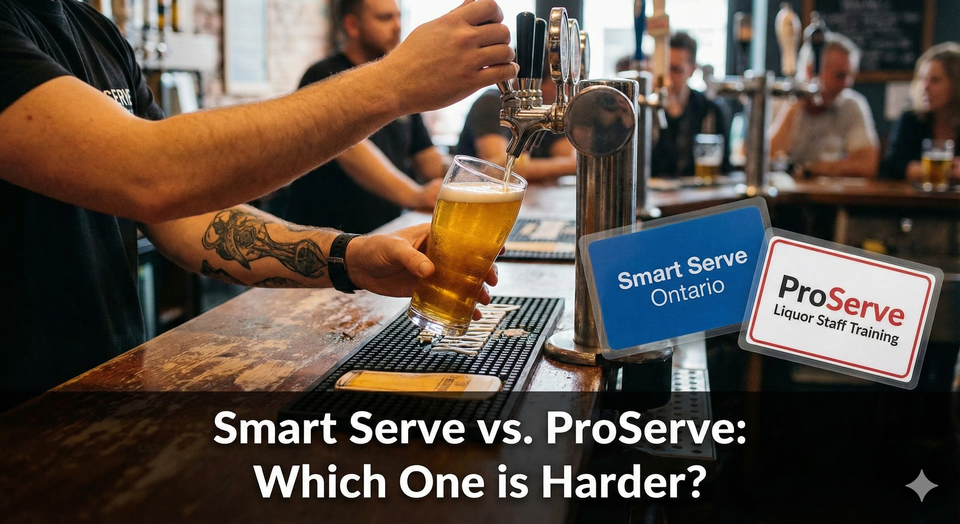
In Canada, you cannot just walk behind a bar and start pouring drinks. It is illegal.
Every province has its own mandatory alcohol certification program. If you are caught serving liquor without one, you (and your employer) face massive fines.
But for workers moving between provinces—especially students or seasonal workers going from Ontario to Banff—the question is always the same: Which test is harder?
In 2026, the answer has changed. Ontario has introduced strict new proctoring rules (webcams are mandatory), while Alberta remains more relaxed.
This guide compares Smart Serve (Ontario) vs. ProServe (Alberta) to help you get certified fast.
Looking for a job that doesn't require a license? Check out our Ultimate Canadian Job Directory or explore entry-level roles in our Cineplex Cast Member Review.
The Basics: What Are They?
Smart Serve (Ontario)
- Mandatory for: Anyone who sells, serves, or handles alcohol in Ontario (Bartenders, Servers, Security, LCBO clerks).
- Cost: ~$44.95 CAD (Tax exempt).
- Expiry: 5 Years (Strict recertification rules).
ProServe (Alberta)
- Mandatory for: Anyone selling or serving liquor in Alberta (Restaurants, Bars, Liquor Stores, Delivery drivers).
- Cost: ~$26.25 CAD.
- Expiry: 5 Years.
The Winner on Price: ProServe (Alberta) is significantly cheaper.
The Difficulty: Which Test is Harder?
We analyzed failure rates and user reports from r/Bartenders and r/KitchenConfidential.
Smart Serve (Ontario): 8/10 Difficulty
- The Proctoring: This is the killer. As of recent updates, the Smart Serve final exam is LIVE Proctored.
- You must have a webcam.
- A human (or AI) watches you take the test.
- If you look away from the screen, check your phone, or if someone walks into the room, your test is terminated immediately.
- The Questions: They focus heavily on "Civil Liability" (lawsuits). You need to know exactly how much you can be sued for if a drunk customer drives home.
ProServe (Alberta): 4/10 Difficulty
- The Proctoring: Much more relaxed. While there are integrity checks, it is generally considered an "open book" style learning experience compared to Ontario's strict exam conditions.
- The Questions: Focus more on practical scenarios (e.g., "How to check ID").
- The Verdict: Most people pass ProServe on the first try. Many people fail Smart Serve because of technical/proctoring issues.
Internal Link: If you are looking for student jobs that don't require exams, check out our Student Jobs Canada guide.
Practical Questions Answered
"Can I transfer my Smart Serve to Alberta?" NO.
- Alcohol laws are provincial. Your Ontario card is useless in Banff. You must pay for and take ProServe.
- Exception: Some provinces have reciprocity agreements, but Ontario and Alberta generally do not.
"Is the webcam really watching me?" YES (For Smart Serve).
- Users consistently report failing because their "eyes moved off-screen too much." You must sit in a designated room alone. Do not try to cheat.
"Do I need it before I apply?" YES.
- Put "Smart Serve Certified" (or ProServe) at the top of your resume. Managers will delete your application if they don't see it. They don't have time to wait for you to pass a test.
Frequently Asked Questions
How long does the course take?
Smart Serve: Approx 4 hours. You cannot skip the videos; they are timed. ProServe: Approx 2–4 hours. You can move through the modules faster if you read quickly.
What happens if I fail?
Smart Serve: You usually get 2 attempts with your purchase. If you fail both, you must pay $44.95 again. ProServe: You have unlimited attempts (within reason) to pass the quizzes, but the final exam may have limits depending on the specific provider platform updates.
Can I work at the LCBO/Cannabis store with this?
Alcohol: Yes. Cannabis: No. You need CannSell (Ontario) or SellSafe (Alberta) for cannabis jobs. These are separate licenses.
Deep Dive: How to Actually Pass (Cheat Codes & Pitfalls)
Both tests have trick questions designed to fail you. Knowing the "exam logic" before you start can save you $40 and a lot of stress.
1. Smart Serve: The "Joint Liability" Trap
The hardest part of the Smart Serve exam isn't identifying a drunk person; it's the legal questions.
- The Concept: "Joint and Several Liability."
- The Question: You serve a customer one beer. They go to another bar, get drunk, drive, and crash. Are you liable?
- The Answer: YES. Under Ontario's strict civil liability laws, you can be held 100% responsible for the damages, even if you only served the first drink.
- Why people fail: They answer based on "fairness" ("I only gave them one drink!"). The test wants the legal answer ("I am part of the chain of service").
2. The Webcam Proctoring: How Not to Get Flaggers
Smart Serve uses AI proctoring that flags "suspicious behavior."
- The Rule: You must scan your room with your webcam before starting.
- The Fail Condition: If the AI detects a second face (even a poster on the wall) or hears a voice (your roommate talking in the hall), your test is terminated instantly.
- The Fix: Take the test in a bathroom or a closet if you have to. Clear the walls. Lock the door. Put your phone in another room.
3. ProServe (Alberta): The Open Book "Secret"
Unlike Ontario, Alberta's ProServe is less draconian about proctoring.
- The Strategy: While you cannot technically "cheat," the exam allows you to take your time.
- The Focus: Alberta focuses heavily on ID checking.
- Key Fact to Memorize: You must request ID from anyone who looks under 25 (not 19 or 30).
- The "Duty of Care": In Alberta, you must not just "cut someone off"; you must ensure they get home safely (e.g., calling a taxi). If you just kick them out into the -30°C cold, you are liable if they freeze.
4. The Uber Eats / DoorDash Loophole
Do you need Smart Serve to deliver food?
- For Burgers: No.
- For Alcohol: YES.
- The Rule: If you want to unlock "Alcohol Deliveries" on Uber Eats (which pay better and have higher tips), you must upload a valid Smart Serve (ON) or ProServe (AB) certificate.
- The Test: You are legally required to check the customer's ID at the door. If you leave beer on the porch, you can be personally fined thousands of dollars. The apps run "Secret Shopper" stings to catch drivers who don't check ID.
5. Reciprocity: Moving Provinces
- Moving to BC: You need "Serving It Right." You cannot transfer your Smart Serve. You must pay $35 and take the BC test.
- Moving to Ontario: You must take Smart Serve. No exceptions.
- Moving to Alberta: You must take ProServe.
- The Exception: Some Bartender Guild certifications (international) might offer equivalency, but for the standard provincial license, you almost always have to pay and re-test.
6. What to Do If You Fail
- Smart Serve: You get 2 attempts. If you fail both, you must pay $44.95 again.
- Tip: If you fail the first time, screenshot the questions you got wrong (if the system allows review) or write them down immediately while they are fresh. The question bank is small; you will likely see them again.
- ProServe: You usually get unlimited attempts on the quizzes and multiple attempts on the final. It is much more forgiving.
Summary: The Final Verdict
- Hardest: Smart Serve (Ontario) due to the webcam proctoring and strict liability questions.
- Best Value: ProServe (Alberta) is cheaper and easier to pass.
- Recommendation: Do not wait until you get hired. Spend the money now. Having the card in your wallet is the difference between getting the interview or being ignored.
About the author
Jeff Calixte (MC Yow-Z) is a Canadian career researcher and digital entrepreneur who studies hiring trends, labour market data, and real entry-level opportunities across Canada. He specializes in simplifying the job search for newcomers, students, and workers using practical, up-to-date information.
Sources
- Smart Serve Ontario: Official training portal.https://smartserve.ca/
- ProServe Alberta (AGLC): Official certification site.https://aglc.ca/training/proserve-liquor-staff-training
- Reddit (r/Bartenders): Industry discussions on certification difficulty.https://www.reddit.com/r/bartenders/
Note Job availability, wages, and hiring conditions can vary widely by province, employer, season, and experience level. All salary ranges and job examples in this guide are estimates based on current labour market data. Always confirm details directly with the employer before applying.