
Painting Student Franchises (Student Works): Scam or Legit? (2026 Review)
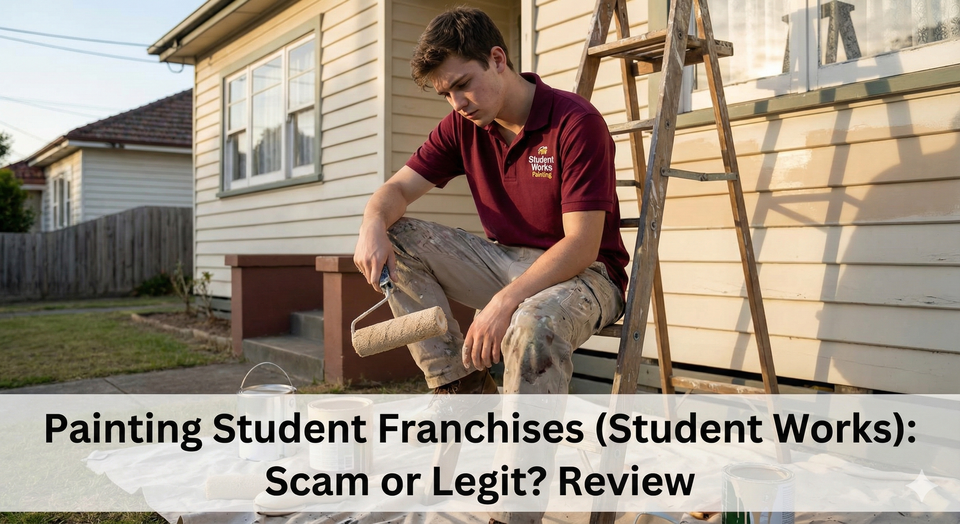
Every Spring, university campuses across Canada are flooded with flyers:
"Earn $20,000 this summer! Learn to run your own business! Management Internship Positions Available!"
The companies—Student Works Painting, Scholars at Your Service, and formerly College Pro—pitch themselves as the ultimate "Business Bootcamp."
They promise that instead of flipping burgers for minimum wage, you will become a "Franchisee," managing a team, handling payroll, and keeping the profits.
But if you search Reddit or Google, you see words like "Scam," "Pyramid Scheme," and "Slave Labour."
So, what is the truth?
In 2026, these companies are legally legitimate franchises, not scams. However, the business model is extremely risky for students, and the "average earnings" they advertise are often misleading.
This comprehensive guide breaks down the two very different jobs you can have with these companies: The Franchisee (The Boss) and The Painter (The Employee). We will expose the hidden costs, the "Piecework" pay trap, and help you decide if you should sign the contract.
Looking for a safer summer job? Check out our guide on TaskRabbit Canada Earnings or see if you qualify for Amazon Fulfillment instead.
The "Franchisee" Role: Business Owner or Victim?
This is the position advertised as an "Internship." It is not a job; it is a business opportunity.
The Pitch:
- You are the "District Manager" for your local area.
- You find the clients (knock on doors).
- You hire the painters.
- You keep the profit after paying royalties.
The Reality:
You are taking on 100% of the financial risk.
- Startup Costs: You often have to pay a "training fee" or buy a starter kit (ladders, marketing materials) which can cost $3,000 - $5,000. Most students have to take out a loan or borrow from parents to start.
- The Royalties: You pay a percentage of every job (e.g., 20-30%) back to the corporate headquarters (Student Works), even if you lose money on the job.
- The Hours: Successful franchisees work 70 to 80 hours a week. You are selling in the evenings and managing painters during the day.
Can you make money?
Yes. The top 10% of franchisees make $20,000+ in a summer.
The Catch: The bottom 50% often make less than minimum wage when you divide their profit by the hours worked. Some even lose money.
The "Painter" Role: The Piecework Trap
If you aren't the boss, you are the labourer.
The Pitch:
"Work outdoors! Work with friends! Earn $20/hour!"
The Reality:
Most student painting companies pay by Piecework, not by the hour.
- How it works: The manager budgets 10 hours for a house. The budget is $200.
- Scenario A: You finish in 10 hours. You make $20/hr.
- Scenario B: It rains, or you are inexperienced, and it takes you 20 hours. You still get $200. Your wage drops to $10/hr.
- The Law: In provinces like Ontario, employers must top you up to minimum wage if your piecework rate falls below it. However, many inexperienced student managers "forget" to do this, or pressure you to "eat the hours."
Internal Link: If you want a job with guaranteed hourly pay, consider getting your Forklift License or working as a Security Guard.
Is It an MLM (Multi-Level Marketing)?
Technically, No.
- MLM (like Amway): You make money by recruiting other people to sell products.
- Student Works: You make money by painting houses. You don't get paid to recruit other franchisees.
Why does it feel like an MLM?
- The Cult-Like Training: The training seminars (often in hotels) involve high-energy chanting, awards ceremonies for "Top Producers," and aggressive sales coaching.
- The Recruitment: They aggressively target high-achieving but naive business students.
- The Risk Transfer: A normal company pays for marketing and ladders. Here, you pay for them. The corporation takes zero risk.
Practical Questions Answered
We scanned r/PersonalFinanceCanada, r/UBC, and r/Waterloo to find the real stories from past franchisees.
"Did you actually make money?"
It's a coin toss.
- Success Story: "I ran a franchise for 3 years. I made $15k my first year and $40k my last year. It was brutal work, but it paid for my tuition."
- Horror Story: "I worked 80 hours a week, alienated my friends (who I hired and couldn't pay well), and ended the summer with $4,000 profit. That's $3.00/hour. I would have made more working at McDonald's."
"Is the cold calling real?"
YES.
- In February and March (while you are still in school doing exams), you are expected to spend your weekends knocking on doors to book estimates.
- The Stress: If you don't book enough jobs by May, your summer is ruined. The pressure is immense.
"What happens if I quit?"
You owe them money.
- The contract usually has a "Breach of Contract" penalty. If you quit halfway through the summer, you might owe them thousands for "Lost Royalties" or "Training Costs." Read the contract carefully.
Deep Dive: The Financials & Safety Risks
Before you sign, you need to understand the numbers and the dangers.
1. The "Underbidding" Problem
- The Scenario: You are a new franchisee. You are desperate to book jobs. You underestimate how long it takes to paint a Victorian house.
- The Bid: You quote the customer $3,000.
- The Reality: The job takes 2 weeks and $1,000 in paint.
- The Math:
- Revenue: $3,000.
- Royalty (25%): -$750.
- Paint: -$1,000.
- Remaining for Labour: $1,250.
- If you have 2 painters working for 2 weeks (80 hours each = 160 hours), you can only pay them $7.81/hour.
- The Result: You legally have to pay them minimum wage ($17.20/hr). The difference comes out of your pocket. You lose money on the job.
2. Safety Training (Heights)
- Student painters work on ladders, often 20–30 feet in the air.
- The Training: It is often rushed.
- The Liability: As a Franchisee, you are technically the employer (in some structures). If your friend falls off a ladder because you didn't enforce safety harness rules, the lawsuit nightmare begins.
- WSIB: Ensure you understand how Workers' Compensation works in your province. The corporation usually handles the paperwork, but you are responsible for on-site enforcement.
3. The "Cold Calling" Tactics
- They teach you scripts to handle rejection.
- The Script: "I'm a student trying to pay for tuition."
- Why it works: It uses sympathy. People hire you because you are a student, even if your price is the same as a professional painter.
- The Problem: Professional painters hate this. You will get yelled at by "Real" painters for undercutting the market with unskilled labour.
Frequently Asked Questions
Is "Scholars at Your Service" the same?
Yes.
The model is nearly identical to Student Works. They compete for the same territories. Compare their royalty structures before choosing.
Can I put this on my resume?
Yes.
- If you succeed: It looks amazing. "Ran a $100k business, managed 12 employees" is top-tier experience for banking or sales jobs.
- If you fail: It still shows grit, but be prepared to explain why it failed in future interviews.
Do I need a car?
Yes.
As a franchisee, a vehicle is mandatory to transport ladders and paint. As a painter, you usually need a way to get to random job sites (buses often don't go to suburban driveways at 7 AM).
Internal Link: If you have a car, you might make easier money with Mystery Shopping or TaskRabbit.
Deep Dive: Contract Loopholes & "Chargebacks"
1. The "Base Pay" vs. "Profit" Confusion
Recruiters throw around big numbers: "Average earnings: $15,000."
- Revenue vs. Profit: They often talk about Revenue (total money collected).
- The Expenses You Pay:
- Paint: $5,000+
- Marketing (Flyers/Lawn Signs): $1,000+
- Vehicle Gas/Insurance: $2,000+
- Painters' Wages: $30,000+
- Royalties: $15,000+
- Admin Fees: $1,000+
- The Reality: A $70,000 revenue business might only leave you with $8,000 in profit after working 600 hours. That is **$13/hour**.
2. The "Chargeback" Nightmare
- Scenario: You paint a house in July. The customer pays. You pay your royalty.
- The Problem: In October, the paint peels because you didn't prep the surface correctly.
- The Warranty: Student Works offers a warranty. The corporate office will send a different franchisee to fix it next year.
- The Cost: They will charge you for that repair. If you have already spent your profits, you might get a bill for $500 a year after you quit.
3. The "Friends & Family" Trap
- New franchisees are encouraged to "Practice Estimates" on family.
- The Pressure: You end up painting your Aunt’s house or your parents' deck.
- The Risk: If you do a bad job (and you likely will, because you are learning), you strain family relationships. Unlike a stranger, your Aunt will remind you at Thanksgiving that her deck is peeling.
4. Resume Value: The "Grit" Factor
- Despite the risks, corporate recruiters (e.g., Pepsi, Labatt, Banks) LOVE Student Works grads.
- Why? It proves you can handle rejection, stress, and 80-hour weeks.
- The Verdict: If you want a corporate sales career, this is a "Badge of Honor" that is worth more than the money. If you just want cash, go tree planting or bartending.
5. The "Production Manager" (PM) Alternative
- If you want leadership experience but are scared of the financial risk, ask to be a Production Manager.
- Role: You manage the painters, move ladders, and deal with the client, but you don't do the sales or pay the royalties.
- Pay: Usually a slightly higher hourly wage ($22-$25/hour) + performance bonus.
- Risk: Zero financial risk. If the business fails, you still get paid your hours.
6. How to Spot a "Bad" District Manager (DM)
Your success depends entirely on your mentor (the District Manager).
- Interview Question: "What was the average profit of first-year franchisees in your district last year?"
- Red Flag: If they dodge the question or give you "Revenue" numbers.
- Green Flag: If they introduce you to a failed franchisee to ask questions. (Shows transparency).
7. "Turf Wars"
- You are assigned a territory.
- The Problem: Other painting companies (College Pro, Scholars, local pros) will invade your turf.
- The Conflict: You will find your lawn signs kicked over or thrown in the garbage. You have to develop a thick skin.
- The Rule: Do not escalate. If you get into a fight with a local contractor, you will lose. They have been there for 20 years; you are there for 4 months.
8. The "Paint quality" Debate
- Customers often ask: "Do you use cheap student paint?"
- The Answer: Most franchises have deals with Sherwin-Williams or Dulux for top-tier paint (e.g., Duration or Diamond).
- The Sales Pitch: "We use the same professional-grade paint as the pros; we just have lower labour costs."
- The Truth: The paint is good. The application (by a 19-year-old on a wobbly ladder) is the variable.
9. Taxes for Franchisees
- Self-Employed Status: You are a Sole Proprietor.
- HST: You must register for HST if you bill over $30k (which you will). You must collect and remit HST.
- Deductions: You can write off your gas, your cell phone bill, and your "Home Office" (your bedroom).
- Warning: Save 25% of your profit for income tax. The company does not deduct it for you.
10. "Success" Metrics
- Top Producer: Revenue over $100k. (Takes incredible dedication).
- Average: Revenue $50k - $70k.
- Failure: Revenue under $30k. (You will likely lose money).
- Advice: If you aren't willing to knock on 2,000 doors in March, do not sign the contract.
Summary: A High-Stakes Gamble
- For Franchisees: Only do this if you are highly motivated, have a safety net (parents who can loan you money), and want a career in Sales/Management. Do not do it just for "easy money." There is nothing easy about it.
- For Painters: Only accept the job if you get a written guarantee of Hourly Minimum Wage. If they insist on "Piecework Only" and you have no experience, walk away. You will work harder than a construction worker for less than a barista.
About the author
Jeff Calixte (MC Yow-Z) is a Canadian career researcher and digital entrepreneur who studies hiring trends, labour market data, and real entry-level opportunities across Canada. He specializes in simplifying the job search for newcomers, students, and workers using practical, up-to-date information.
Sources
- Employment Standards Act (Ontario): Rules on Piecework and Minimum Wage. https://www.ontario.ca/document/your-guide-employment-standards-act-0/minimum-wage
- Student Works Painting: Franchise information and earnings claims. https://studentworks.com/
- Better Business Bureau (BBB): Complaints and reviews for painting franchises. https://www.bbb.org/
Note
Job availability, wages, and hiring conditions can vary widely by province, employer, season, and experience level. All salary ranges and job examples in this guide are estimates based on current labour market data. Always confirm details directly with the employer before applying.