
Traffic Control Lane Closure Tech: How to Upgrade from Flagger ($35/hr)
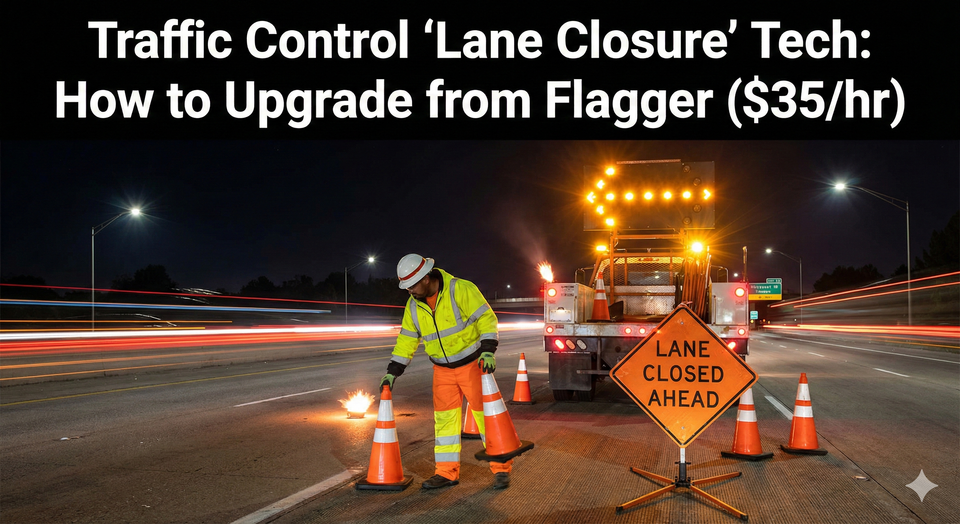
If you drive past a construction zone, you usually see two types of people.
- The Flagger: Standing still, holding a Stop/Slow paddle, looking bored.
- The Tech: Driving the pickup truck with the flashing arrow, setting up cones, and reading blueprints.
Here is the secret the staffing agencies won't tell you: The Flagger makes $19/hour. The Tech makes $30 - $40/hour.
In 2026, the demand for Lane Closure Technicians (LCTs) is exploding. Cities are doing roadwork at night to avoid traffic, and they need skilled workers who know how to close a 400-series highway lane without causing a pileup.
This guide explains how to spend $200 on a one-day course (Book 7) to double your hourly wage, the difference between Union (LiUNA) and Private pay, and why this job is safer than holding the sign.
Looking for other driving jobs? Check out our guides on Snow Plow Pay or Forklift Certification.
1. The Hierarchy: TCP vs. LCT
You need to know the terminology before you apply, or you will get stuck with the "Stop Sign" job.
Level 1: Traffic Control Person (TCP)
- The Job: You stand in one spot for 8–12 hours holding a paddle. You cannot have your phone out. You cannot sit down.
- The Pay: Minimum wage to $22/hour.
- The Barrier: almost zero. You just need a basic "TCP Card" (often free from the employer).
Level 2: Lane Closure Technician (LCT)
- The Job: You drive the company truck. You arrive before the construction crew to "close the lane" using cones, barrels, and signs. You sit in the truck (the "Crash Truck") while the work happens.
- The Pay: $28 - $38/hour (plus overtime).
- The Barrier: You need a G License and "Book 7" Certification (Ontario) or BCCP (BC).
2. The Ontario "Book 7" Secret
In Ontario, the rules for closing a road are written in a government manual called OTM Book 7 (Temporary Conditions).
- The Myth: "You need to be an engineer to do layouts."
- The Reality: You can get a "Book 7 for Workers" certificate in one day.
- Cost: ~$185 - $250.
- Where to get it: Look for training providers like Safety First Training or Labor Tek.
- The ROI: One day of work as an LCT pays for the course. Once you have this on your resume, you are no longer a "labourer"—you are a "Technician."
3. British Columbia Rules (BCCP)
BC is stricter. Traffic control is regulated by WorkSafeBC, and the training is more intense.
- The Ticket: You need the BCCP (British Columbia Construction Safety Alliance) card.
- The Process: It is a 2-day course with a written exam.
- The Pay: BC pays the highest rates in Canada. Experienced LCTs in Vancouver often make $35 - $42/hour because working on mountain highways is high-risk.
- Top Employer: The Universal Group is the biggest player in BC. They are almost always hiring LCTs.
4. Union vs. Private Pay (2026 Rates)
Like most trades, the big money is in the Union.
Private Companies (The "Starter" Jobs)
- Examples: Powell Contracting, Stinson, private staffing agencies.
- Pay: $24 - $28/hour.
- Pros: Easy to get hired. They often pay for your training.
- Cons: No pension. Irregular hours.
Union Jobs (LiUNA Local 183 / 506)
- The Gold Standard: LiUNA (Labourers' International Union of North America) represents many traffic control workers on major highway projects (Hwy 401, Hwy 413).
- Pay: $35 - $45/hour (Total package including benefits).
- Perks: Double time on Sundays. Full medical/dental.
- How to join: You usually have to be sponsored by a company or attend a LiUNA job fair. Having your Book 7 and DZ License (for the big crash trucks) makes you a prime candidate.
5. Street Reality: The Dangers
We need to be honest: This job is dangerous.
- The "Buffer Zone": As an LCT, you are often walking on the highway before the cones are set up. You are the only thing between a worker and a car doing 120 km/h.
- Night Shifts: 90% of LCT work happens at night (7:00 PM - 5:00 AM). If you can't handle night shifts, do not apply.
- The "Crash Truck": Your truck has a giant metal accordion on the back called a TMA (Truck Mounted Attenuator). Its job is to get hit so you don't. You will feel safer in the truck than standing on the road.
6. How to Get Hired (The "Cold Call" Script)
Don't just apply on Indeed. Call the Traffic Control companies directly.
Step 1: Get your G License (clean abstract) and take a Book 7 course (or BCCP).
Step 2: Google "Traffic Control Companies [Your City]."
Step 3: Call them and say:
"I have my full G License, a clean abstract, and my Book 7 certification. Do you need Lane Closure Technicians for the night shift?"
Why this works: Every company is desperate for drivers who can work nights. They have plenty of people to hold signs; they need people to drive trucks.
Frequently Asked Questions
Do I need my own truck?
No.
- You drive the company's vehicle (usually a Ford F-250 or F-350).
- Warning: You must drive carefully. Most company trucks have GPS trackers that monitor your speed and braking. If you drive like a maniac, you will be fired.
Is it seasonal?
Mostly.
- The busy season is April to November (Construction Season).
- Winter Work: In the winter, some LCTs switch to Snow Plow Operations, or they work on emergency utility repairs (water main breaks wait for no one).
Can women do this job?
Yes.
- Traffic Control has one of the highest percentages of female workers in the construction industry.
- Since the job relies on Process and Safety (following the diagram) rather than brute strength, it is an excellent entry point for women in trades.
Summary: Drive the Truck
- Get the Ticket: Spend the ~$200 on the Book 7 (Ontario) or BCCP (BC) course. It pays for itself in 3 days.
- Get the License: You need a clean driving record. If you have a DUI, you cannot be an LCT.
- Go Union: Aim for LiUNA companies once you have 6 months of experience. The pension alone is worth millions over a career.
About the author
Jeff Calixte (MC Yow-Z) is a Canadian career researcher and digital entrepreneur who studies hiring trends, labour market data, and real entry-level opportunities across Canada. He specializes in simplifying the job search for newcomers, students, and workers using practical, up-to-date information.
Sources
- Ontario Traffic Council: OTM Book 7 Training Providers. https://otc.org/
- WorkSafeBC: Traffic Control Program (TCP) Standards. https://www.worksafebc.com/
- LiUNA Local 183: Collective Agreements for Road Sector. https://liuna183.ca/
Note
Job availability, wages, and hiring conditions can vary widely by province, employer, season, and experience level. All salary ranges and job examples in this guide are estimates based on current labour market data. Always confirm details directly with the employer before applying.