
Tree Planting vs. Brush Clearing: Which Bush Job Pays More? (2026 Comparison)
Every Spring, thousands of Canadian students ask the same question: "How can I make $10,000 this summer?"
The answer usually points to the bush.
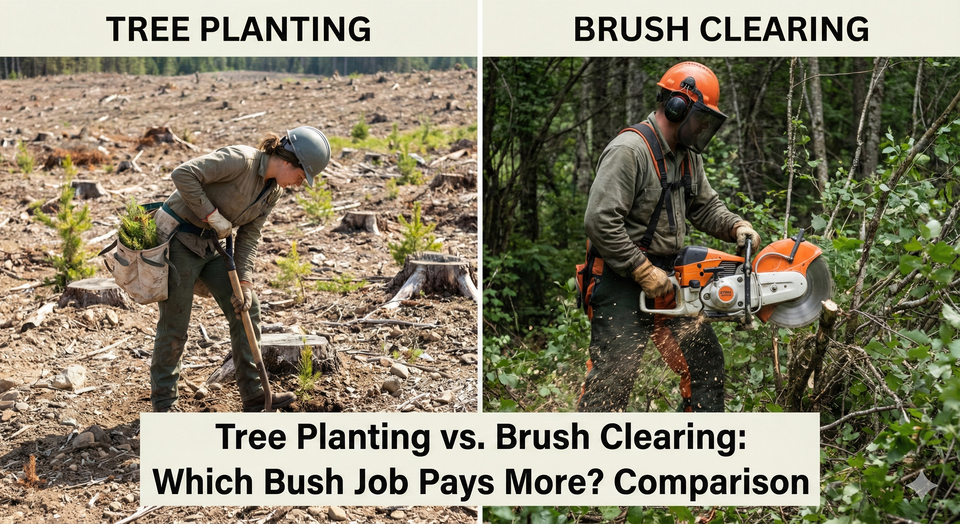
Tree Planting is the famous one. It’s a rite of passage. You live in a tent, get eaten by blackflies, and plant 2,000 trees a day.
Brush Clearing (or "Brushing" / "Thinning") is the lesser-known cousin. You wield a massive "Brush Saw" (like a weed whacker on steroids) and clear vegetation to let the new trees grow.
Both jobs are physically brutal. Both pay by production (Piecework).
But in 2026, the economics have shifted. With new wildfire prevention grants and the "2 Billion Trees" initiative, Brush Clearing is quietly becoming the more profitable—and slightly less miserable—option for veterans.
This guide breaks down the math: Pay per Tree vs. Pay per Hectare. We analyze the physical toll, the startup costs (buying a saw vs. a shovel), and help you decide which bush job will buy your tuition this year.
Hate bugs? Forget the bush. Check out FedEx "Jumper" Pay for winter work or Dietary Aide Jobs for indoor healthcare roles.
The Pay: High Risk vs. Consistent Grind
Both jobs are piecework. You only eat what you kill. But the "Kill" is calculated differently.
1. Tree Planting (The Numbers)
- The Rate: 13¢ to 24¢ per tree (2026 Avg in BC/Ontario).
- The Rookie Reality:
- You will be slow. A rookie plants 800 trees/day = $120/day.
- After camp costs ($25/day), you make **$95**. This is below minimum wage.
- The Vet Reality:
- A "Highballer" plants 3,000 trees/day = $500/day.
- The Season: Short. May to July (approx 50-60 days).
- Total Summer Earnings: $6,000 (Rookie) to $25,000 (Vet).
2. Brush Clearing (The Numbers)
- The Rate: $400 to $1,000 per hectare.
- The Rookie Reality:
- Learning to use the saw takes 2 weeks. You will make $200/day quickly because it relies more on walking speed than fine motor skills.
- The Vet Reality:
- An experienced Brusher clears 1-1.5 hectares/day = $600 - $800/day.
- The Season: Long. June to October (often 90+ days).
- Total Season Earnings: $20,000 - $45,000 is common for dedicated brushers.
Winner: Brush Clearing. The season is longer, and the daily average for intermediates is often higher than planting.
The Physical Toll: Back vs. Shoulders
Pick your poison. Which part of your body do you want to destroy?
Tree Planting: "The Repetitive Strain King"
- The Motion: You bend over at the waist, strike the ground, insert tree, stomp.
- Repetition: 2,000 times a day.
- Injuries:
- "The Claw": Tendonitis in the wrist/forearm.
- Planter’s Back: Chronic lower back pain.
- Shovel Knee: Bruising/inflammation from kicking the shovel.
Brush Clearing: "The Vibration King"
- The Motion: You wear a harness that holds a 25lb saw. You swing it left and right like a pendulum. You walk constantly.
- Repetition: Constant vibration for 8 hours.
- Injuries:
- Vibration White Finger: Nerve damage from the engine vibration.
- Traps/Shoulders: The harness digs into your shoulders.
- Hearing Loss: Chainsaws are loud. You need top-tier ear protection.
Winner: Brush Clearing. While heavy, you stand upright. It saves your lower back. Planters often switch to Brushing when their backs give out.
Startup Costs: $100 vs. $1,500
This is the biggest barrier to entry.
Tree Planting Cost:
- Gear: Shovel ($60), Bags ($100), Boots ($150).
- Total: ~$350.
- Camp Costs: Most companies charge ~$25/day for food/tent space.
Brush Clearing Cost:
- Gear: You often have to BUY YOUR OWN SAW.
- Husqvarna 545 or Stihl FS 460 = $1,400 - $1,800.
- Maintenance: You buy your own gas, oil, and files (sharpening blades).
- Total: ~$2,000 upfront.
- Note: Some companies provide saws, but they pay a lower hectare rate.
Winner: Tree Planting. It is cheap to start. Brushing is an investment.
Practical Questions Answered
We scanned r/TreePlanting and r/Forestry to find the bush wisdom.
"Are bugs worse for one?"
Yes. Planting is worse.
- Why: Planters work in "swampy" ground (muskeg) in May/June (Peak Blackfly Season). You can't wear a face net because you need to see the ground.
- Brushers: Work later in the summer (August/Sept) when bugs are dying down. Plus, the 2-stroke engine smoke keeps mosquitoes away.
"Which is more dangerous?"
Brushing.
- A shovel can't cut your leg off. A brush saw spinning at 10,000 RPM can.
- Kickback: If the blade hits a rock, the saw kicks back violently. You must wear Kevlar chaps and face shields.
"Can I do both?"
Yes.
- The "Coastal" Season: Plant on Vancouver Island in Feb/March.
- The "Interior" Season: Plant in Prince George in May/June.
- The "Brush" Season: Switch to brushing in July/August/Sept.
- Total Earnings: This "Year-Round Silviculture" lifestyle can net $60,000+ in 6 months.
Deep Dive: 2026 "Wildfire Prevention" Grants
In 2026, Brushing is exploding due to FireSmart grants.
- The Job: "Fuel Reduction." Clearing underbrush near towns (e.g., Kelowna, Jasper) to prevent forest fires from spreading.
- The Pay: These are often Hourly Contracts ($25-$35/hr) rather than piecework.
- Why do it: Guaranteed money. Less pressure. You are saving towns, not just growing timber.
- Where to find it: Look for job titles like "Wildfire Mitigation Labourer" or "Vegetation Management."
Frequently Asked Questions
Do I need a license?
- Planting: No.
- Brushing: Sometimes. You might need a Chainsaw Safety (Bucking) ticket, even for brush saws.
Is camp life mandatory?
- Mostly Yes. You live in a bush camp (tents, mess hall, portable showers).
- Motel Shows: Some smaller crews stay in motels in small towns. This is more expensive but comfortable.
Can I listen to music?
- Planting: Yes. Podcasts get you through the day.
- Brushing: No. You have to wear heavy-duty earmuffs. You can't hear music over the engine anyway.
Summary: Which Should You Choose?
Choose Tree Planting IF:
- You are broke (low startup cost).
- You want the classic "social" camp experience (parties, community).
- You are short (less distance to bend).
Choose Brush Clearing IF:
- You have $2,000 to invest in a saw.
- You have a bad back but strong shoulders.
- You want a longer season and higher daily earnings potential.
- You prefer working alone (the noise isolates you).
About the author
Jeff Calixte (MC Yow-Z) is a Canadian career researcher and digital entrepreneur who studies hiring trends, labour market data, and real entry-level opportunities across Canada. He specializes in simplifying the job search for newcomers, students, and workers using practical, up-to-date information.
Sources
- Tree-Planter.com: Earnings calculators and gear reviews. https://www.tree-planter.com/
- BC Wildfire Service: Vegetation management programs. https://www2.gov.bc.ca/gov/content/safety/wildfire-status
- Brinkman Reforestation: Pay rate FAQs. https://www.brinkmanreforestation.ca/
Note
Job availability, wages, and hiring conditions can vary widely by province, employer, season, and experience level. All salary ranges and job examples in this guide are estimates based on current labour market data. Always confirm details directly with the employer before applying.